Plastic manufacturing is at a turning point. The materials that have shaped modern industry, lightweight and versatile, are now under the greatest scrutiny in materials science history. At the centre of scrutiny is polystyrene, a thermoplastic used in nearly every sector, from refrigerator liners and electronics to food-service packaging and insulation. Within this family, high-impact polystyrene is one of the most important types. This rubber-toughened plastic is designed to combine the easy processing of GPPS with the mechanical strength required by demanding applications. How this material is produced, recycled, and integrated into a more sustainable manufacturing model is the key question facing the industry today.
In this blog, Supreme Petrochem Ltd, India’s largest polystyrene producer, with a capacity of 300,000 TPA of PS and 118,000 TPA of EPS across its Nagothane and Chennai facilities, explores the sustainability path for polystyrene production. It covers the properties that make high-impact polystyrene suitable for durable plastic manufacturing and how closed-loop recycling systems and responsible production practices are transforming the future of impact-grade plastic resin in India and globally. This guide provides a clear, fact-based view of the industry’s current state and future direction.
What Is High Impact Polystyrene and Why Does It Matter in Modern Manufacturing?
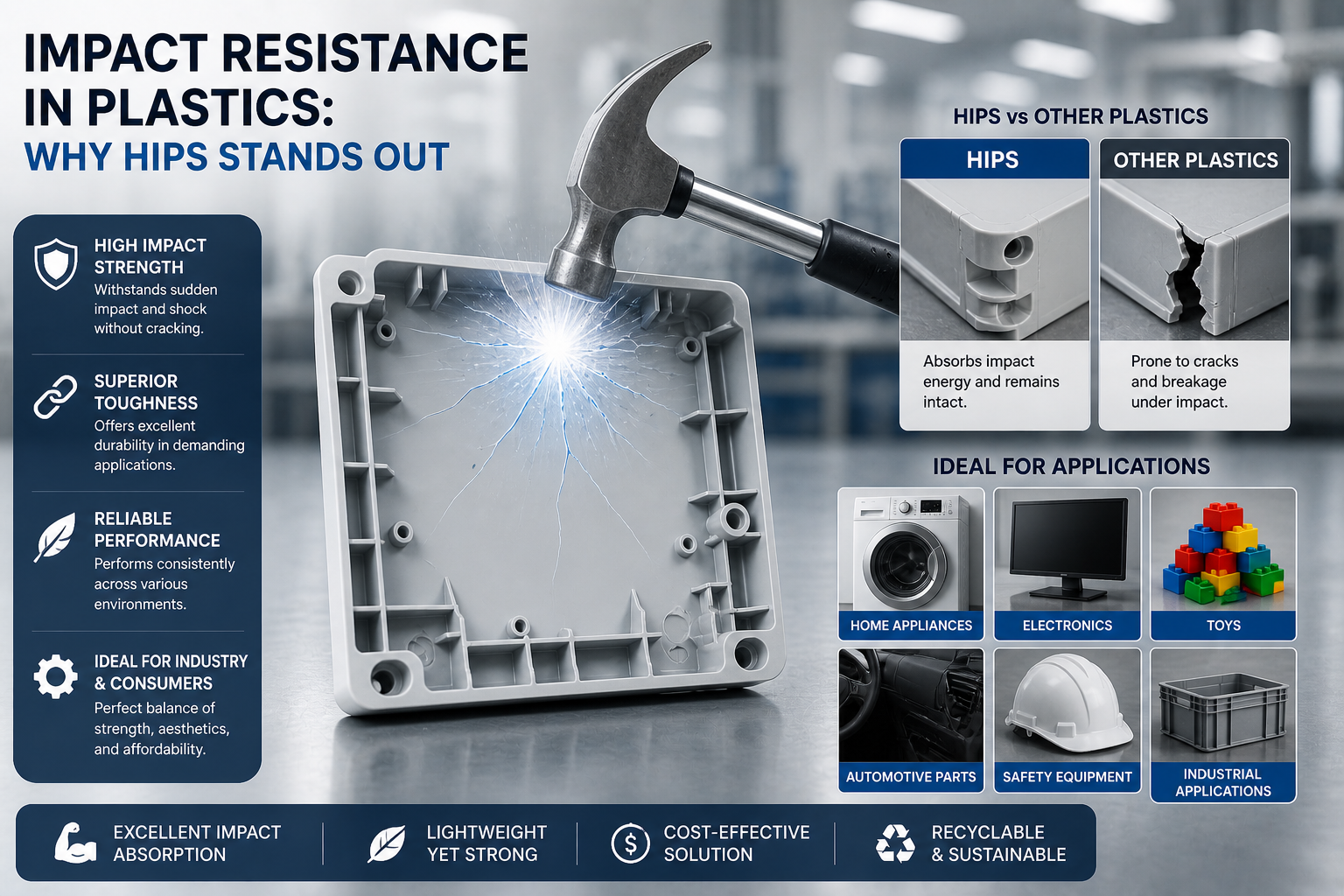
High-impact polystyrene (HIPS) is a type of polystyrene made by adding polybutadiene rubber to the GPPS matrix during polymerisation. This rubber-toughened structure distributes impact energy throughout the material, preventing brittle fractures that occur in standard GPPS. The outcome is a plastic resin that is much more suited for applications where mechanical stress, drops, or vibrations occur during the product’s lifespan.
The difference between GPPS and HIPS is significant:
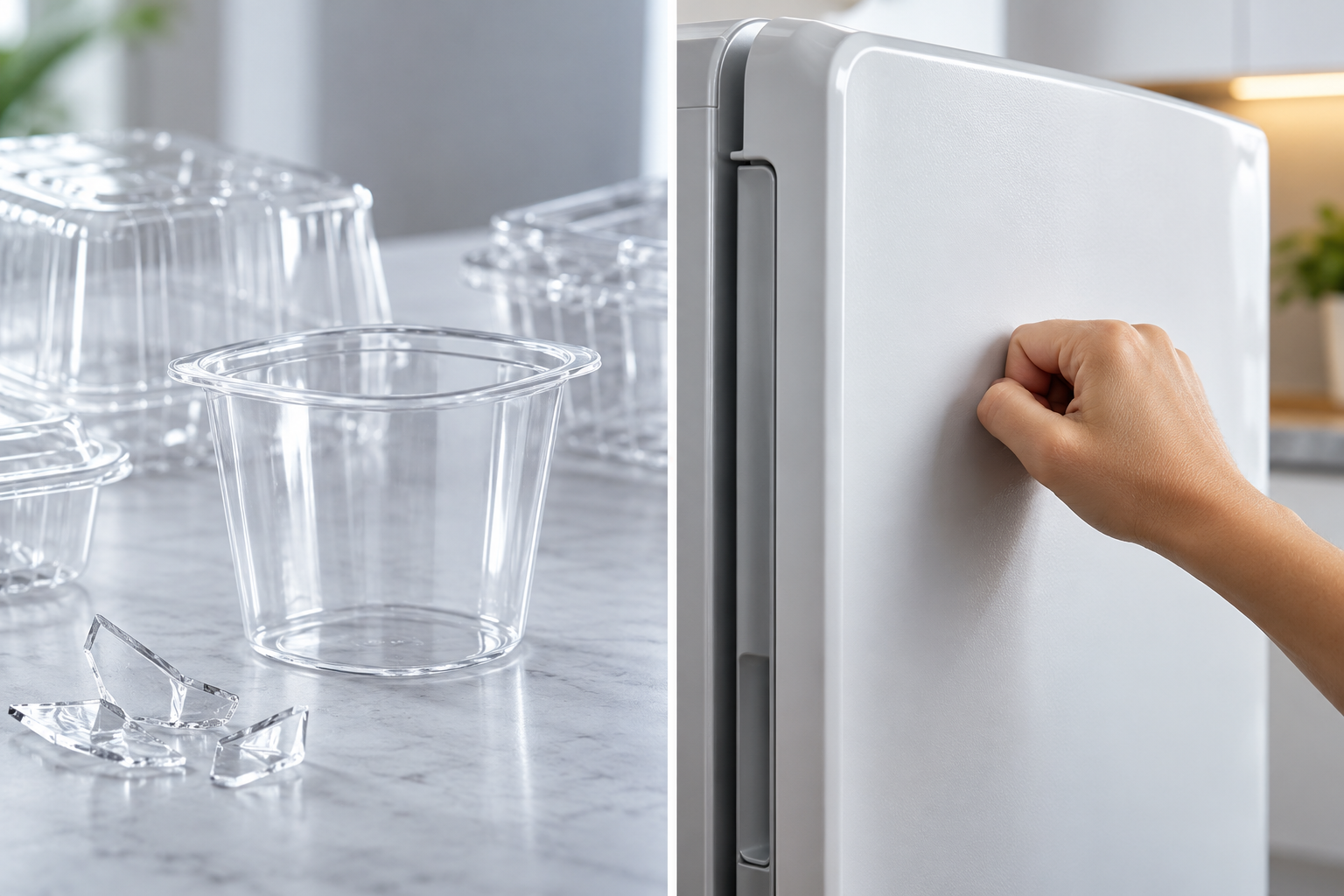
• GPPS (General Purpose Polystyrene) is clear, transparent, and rigid, making it ideal for applications needing visual transparency, like CD cases, disposable cutlery, and display trays.
• HIPS (High Impact Polystyrene) includes a rubber phase that greatly increases impact strength but sacrifices some optical clarity. The result is an opaque, tough material that is much more stable under mechanical stress.
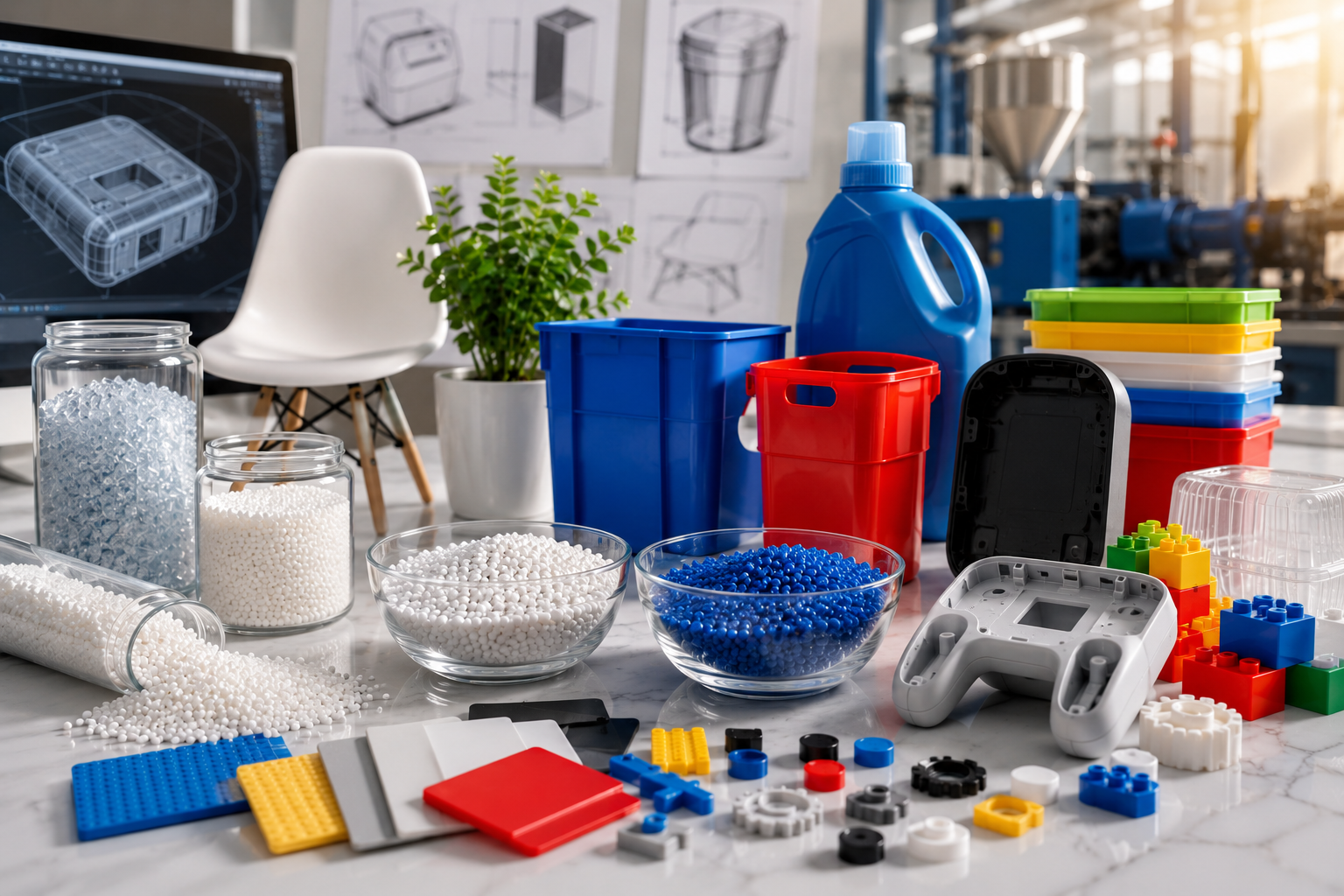
The polystyrene impact modifier, polybutadiene rubber, plays a crucial role by creating a two-phase structure within the polymer. When stress is applied, the rubber particles stop micro-cracks before they can spread, absorbing the impact energy instead of allowing the part to break. This mechanism is key for impact-resistant plastics in the polystyrene family, making HIPS the preferred choice for electronics housings, appliance liners, medical device parts, and food-service trays where rigidity alone is not enough.
| Property | HIPS Performance |
| Base material | General Purpose Polystyrene (GPPS) matrix |
| Impact modifier | Polybutadiene rubber (rubber toughened phase) |
| Key characteristic | Significantly higher impact resistance than unmodified GPPS |
| Processing methods | Injection moulding, extrusion, thermoforming, blow moulding |
| Appearance | Opaque (rubber phase reduces transparency) |
| Industrial advantages | Durable, cost-effective, excellent mouldability |
| Key applications | Consumer electronics housings, appliance parts, food-service, and packaging |
| Recyclability | Mechanically recyclable; closed-loop collection improves yield |
Source: supremepetrochem.com — All HIPS product details verified from the Supreme Petrochem polystyrene product pages.
Is Polystyrene Recyclable, and What Does Sustainable Production Actually Mean?
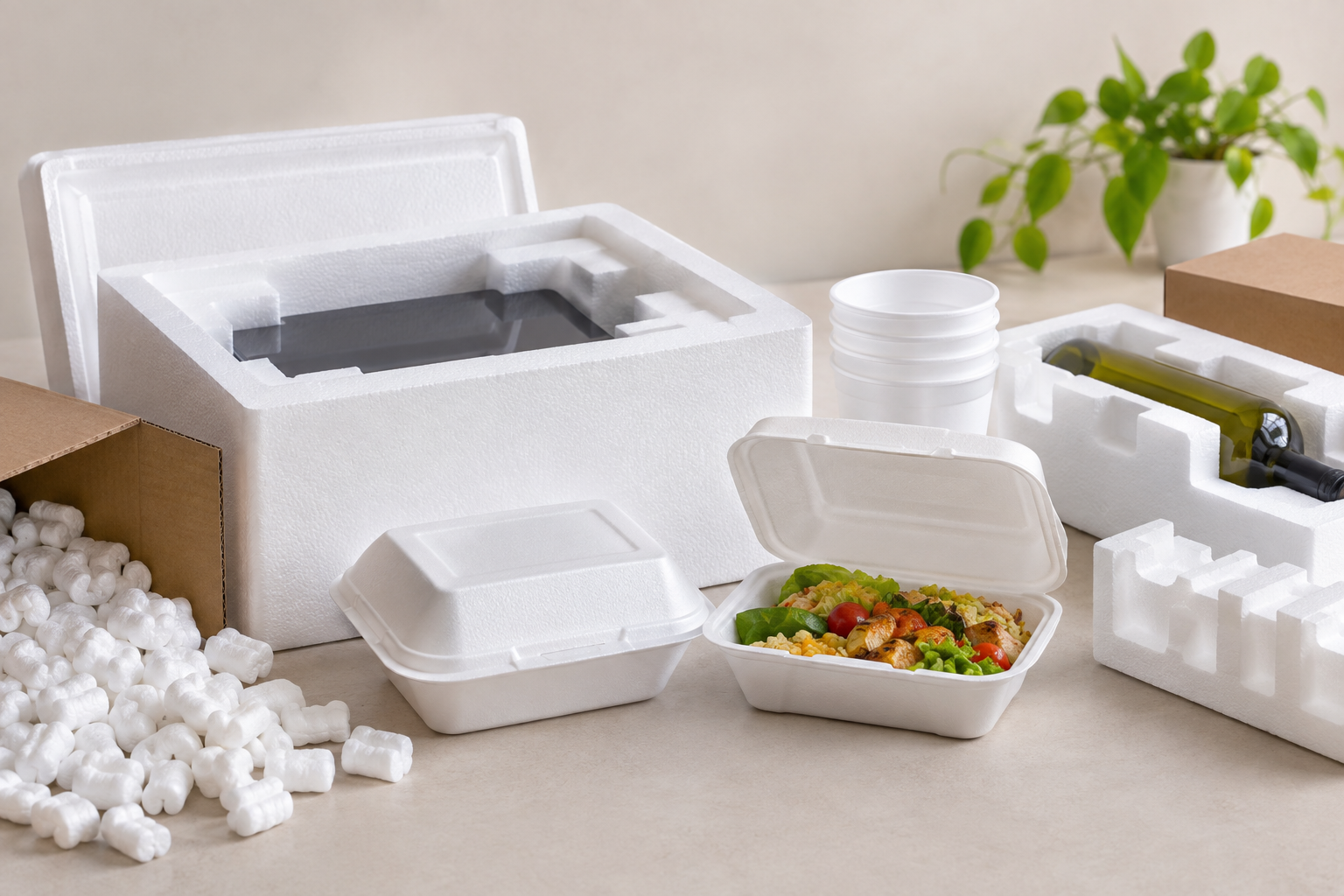
Polystyrene is recyclable; both GPPS and HIPS can be mechanically recycled through collection, sorting, granulation, and re-extrusion into recycled-grade resin. The issue is not the material’s recyclability but the cost of collection and sorting. Polystyrene products, especially expanded polystyrene (EPS) used for packaging, are lightweight and bulky, making collection more expensive than the material’s recovered value. Contaminated or mixed polystyrene streams further lower the quality of the recyclate.
For high-impact polystyrene, the situation is better than for EPS. HIPS is mainly used in durable applications with longer product life cycles, like electronics casings, appliance liners, and trays. This means the material enters the waste stream in larger, cleaner pieces that are easier to sort and granulate. Industrial HIPS scrap from injection moulding and thermoforming can be directly ground back into the production process, recovering material value at a lower cost.
Sustainable polystyrene production includes several key aspects:
• Energy-efficient manufacturing: Lowering energy usage per tonne of polystyrene produced through process improvements, heat recovery, and efficient equipment. This is where modern large facilities have a clear edge over older or smaller operations.
• Responsible raw material sourcing: Styrene monomer, the main ingredient for polystyrene, comes from petroleum. Reducing feedstock intensity, increasing polymer output per unit of styrene, and moving towards responsibly produced feedstocks contribute to sustainability at the upstream level.
• Closed-loop material recovery: Designing post-consumer polystyrene products for recycling and creating collection and processing systems that treat polystyrene as a separate stream rather than as contamination in mixed plastics.
• Waste reduction in production: Minimising resin waste during moulding and fabrication through precise process control, lowering the amount of off-spec material that can’t be reused.
How Supreme Petrochem Is Building Responsible Durable Plastic Manufacturing in India
Supreme Petrochem Ltd (SPL) started making polystyrene in 1995 with a capacity of 66,000 TPA. Over the next three decades, the company became India’s largest polystyrene maker, reaching a capacity of 300,000 TPA across its manufacturing portfolio. Its main plant in Nagothane, Maharashtra, spans 337 acres and has four advanced production lines. The Nagothane facility produces various grades of both GPPS and high-impact polystyrene for injection moulding, extrusion, thermoforming, and blow moulding, catering to both Indian customers and export markets.
On the expandable polystyrene front, SPL entered the EPS market in 2006 by acquiring a 6,000 TPA facility from Shin-Ho Chemicals. The company has since increased its EPS capacity to 118,000 TPA across Nagothane and Chennai, becoming India’s top EPS producer as well. EPS’s role in insulation, cold chain logistics, and protective packaging highlights its economic and environmental importance. It reduces energy use in buildings and food spoilage during transport, contributing to sustainability at the application level.
SPL’s commitment to responsible manufacturing focuses on a Health, Safety, and Environment (HSE) program along with quality certifications that include ISO standards. The company’s sustainability efforts, detailed on its website, reflect the industry’s broader shift toward resource efficiency, emissions control, and responsible operations in the production chain. Large producers like SPL, operating at 300,000 TPA, have better energy efficiency per tonne than smaller, older plants, which supports SPL’s sustainability stance in the Indian market.
Future Trends: How Is the Polystyrene Industry Moving Towards Greater Sustainability?
The global polystyrene industry is responding to sustainability pressures through material innovation, process improvements, and infrastructure investments. Several trends are shaping the future of high-impact polystyrene production in the coming decade:
• Chemical recycling for polystyrene: Unlike mechanical recycling, which remelts and re-extrudes the polymer, chemical recycling breaks polystyrene back into its monomer components, recovering styrene that can be re-polymerised into virgin-quality resin. This depolymerisation approach, developed in several European and Japanese facilities, is gradually being scaled up and could significantly enhance the end-of-life value of both HIPS and GPPS.
• Bio-based styrene feedstocks: Researchers are exploring ways to produce styrene from bio-based materials rather than just from petroleum. A bio-based or partly bio-based feedstock would allow high-impact polystyrene to have a lower carbon footprint than standard petroleum-derived types, without changing the material’s processing or performance.
• Extended producer responsibility (EPR): India’s Plastic Waste Management Rules, updated in 2022, introduce EPR obligations that require plastic producers to support the collection and recycling of post-consumer plastic waste. For large polystyrene producers like SPL, this creates a direct financial incentive to invest in collection systems and recycling partnerships.
• Improved HIPS formulations: Advances in material science are allowing high-impact polystyrene to have better properties. This means we can achieve the same or even better impact strength while using less rubber. Reducing the polybutadiene phase by a small amount enhances recyclability (resulting in a purer polystyrene matrix) and lowers raw material use per finished part.
In India, demand for impact-grade plastic resins is rising across sectors such as consumer electronics, automotive parts, medical devices, and white goods. These areas need the right mix of easy processing, shape stability, and mechanical strength that rubber-toughened plastics like HIPS can provide. The increase in demand, along with rising regulations on recyclability and responsible sourcing, creates a situation where sustainable polystyrene production is not just a goal but a necessity.
What are the long-term benefits of sustainable HIPS in industrial applications?
The case for using sustainable, high-impact polystyrene in industry rests on three main points: material performance, life-cycle benefits, and supply chain strength.
On material performance: HIPS offers strong impact resistance, precise shape under pressure, and reliable processing for methods like injection moulding, thermoforming, and extrusion. It stands out as one of the most adaptable impact-resistant plastics available in large quantities. Alternatives like ABS may have similar properties, but they are often more expensive and have more complex chemical structures that complicate recycling. HIPS’s simpler two-part structure, polystyrene matrix plus rubber toughening phase, makes processing and recovery easier.
On life-cycle benefits: Products made from high-impact polystyrene for long-lasting uses, such as electronic casings, trays, and appliance parts, last longer than single-use polystyrene products. Longer lifespans mean greater economic value per unit of material and less frequent replacement, leading to a smaller material footprint each year. When these products are collected and recycled, the material cycle moves closer to circularity.
On supply chain strength: As the industry faces increased regulations on recycled content, EPR obligations, and sustainability reporting, producers sourcing from suppliers with verified sustainability credentials and strong quality management systems, such as ISO-certified facilities like SPL’s Nagothane plant, can lower their compliance risks. Sourcing polystyrene and high-impact polystyrene from a local Indian supplier with a 300,000 TPA capacity also reduces reliance on imports and the associated carbon footprint of long-distance transportation.
The future of polystyrene should not be viewed through the lens of its past as a problematic waste material. It’s about the decision-makers, producers, processors, designers, and regulators who are now making decisions regarding formulation, use, and recovery. High-impact polystyrene, with its strong mechanical performance, ease of processing, and potential for recycling, plays a key role in this evolving narrative. As India’s largest polystyrene producer, Supreme Petrochem Ltd is well positioned to influence how this narrative develops in the Indian market through ongoing investments in efficiency, responsible health and safety practices, and collaboration with recycling and circular-economy initiatives.
Frequently Asked Questions
High-impact polystyrene (HIPS) adds polybutadiene rubber to the GPPS matrix, creating a rubber-toughened plastic that significantly boosts impact resistance. While GPPS is clear and rigid, it is also brittle; HIPS is opaque and much tougher. HIPS impact strength stems from its two-phase microstructure, in which the rubber particles absorb and dissipate impact energy before it can cause fractures. Supreme Petrochem produces various grades of both, tailored for specific processing and performance needs.
Polystyrene can be mechanically recycled. GPPS, HIPS, and EPS can all be collected, sorted, ground, and reprocessed into recycled resin. The main challenge in India, like elsewhere, is the infrastructure for collecting and sorting. Industrial HIPS scrap from moulding and thermoforming can be recycled into production with minimal quality loss. Recycling post-consumer materials requires better collection systems, which India’s revised Plastic Waste Management Rules and extended producer responsibility framework are starting to improve.
Supreme Petrochem Ltd (SPL) is India’s top producer of polystyrene (300,000 TPA capacity) and expandable polystyrene (118,000 TPA). The company began its operations in 1995 at its Nagothane facility in Maharashtra, a 337-acre plant featuring four advanced production lines. SPL serves both domestic and international markets. The company produces GPPS, HIPS, and EPS grades for various applications, including injection moulding, extrusion, thermoforming, and blow moulding, as well as ABS, compounds, and XPS insulation products.
HIPS provides a unique mix of impact strength, dimensional accuracy, moldability, and cost efficiency, making it the preferred choice for consumer electronics housings, appliance inner liners, food-service trays, and institutional packaging. Compared to ABS, HIPS is generally more affordable, easier to recycle, and simpler in composition. Its properties, such as resistance to mechanical stress and consistent performance in thermoforming and injection moulding, make it one of the most reliable options for high-volume, durable plastic manufacturing.