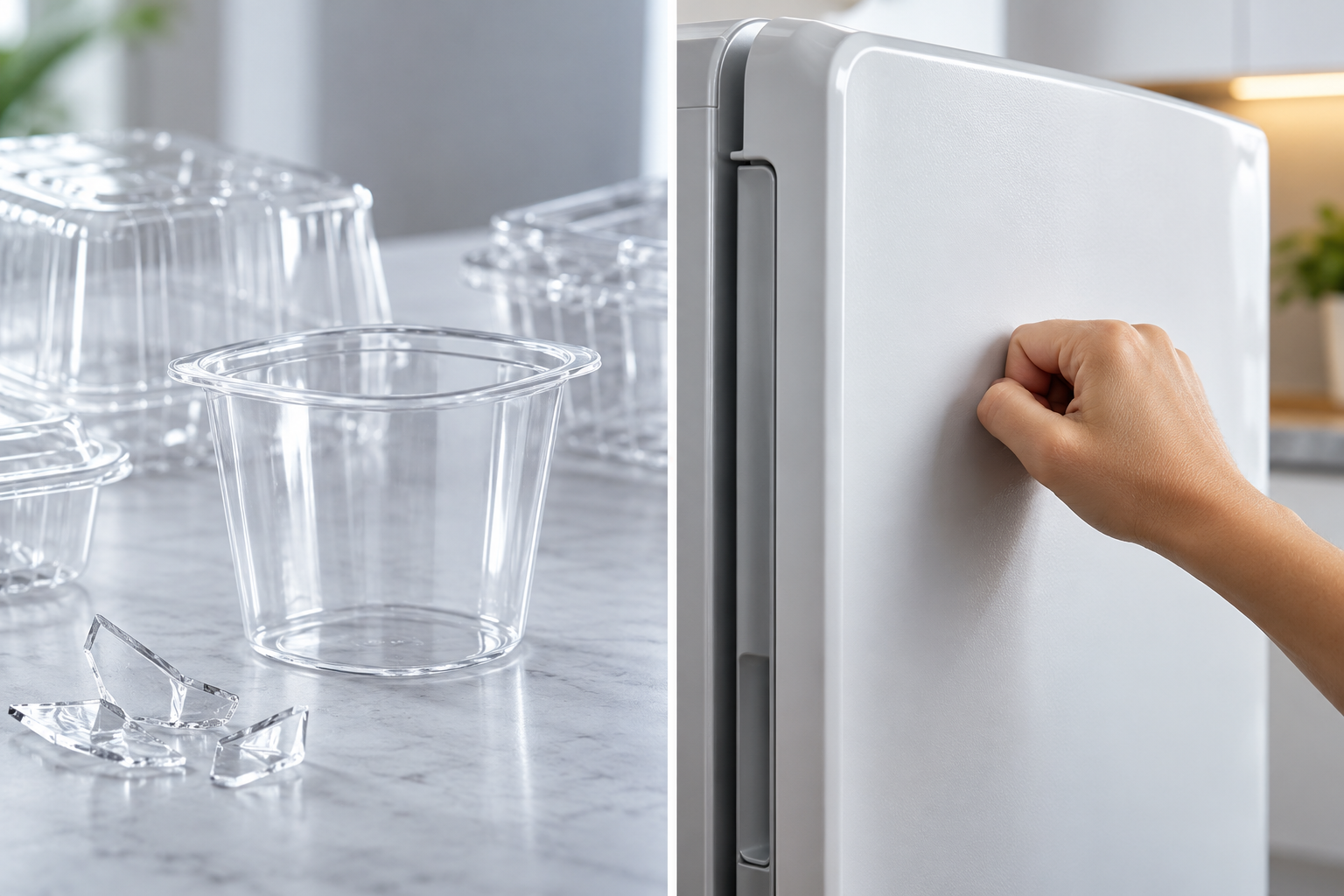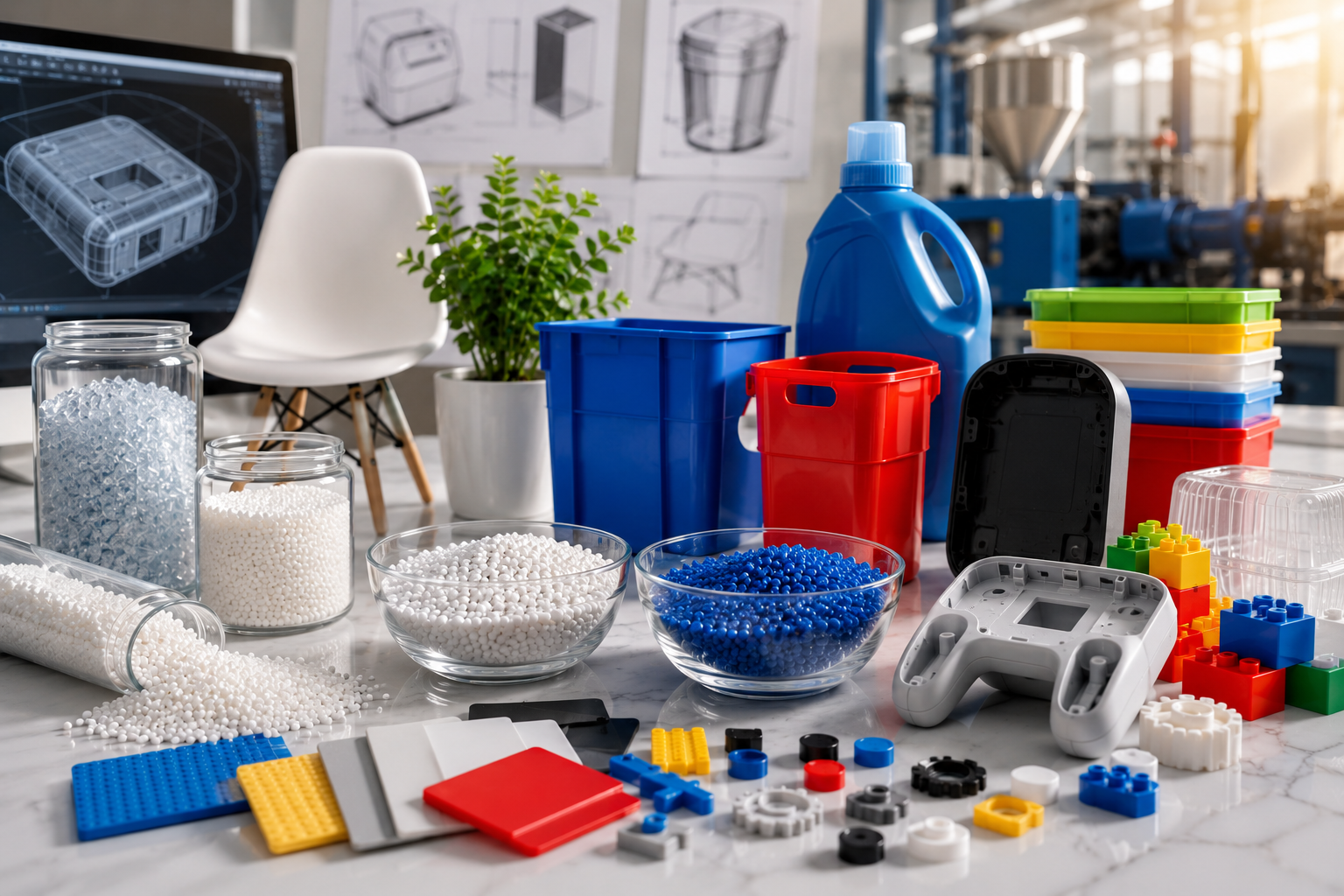
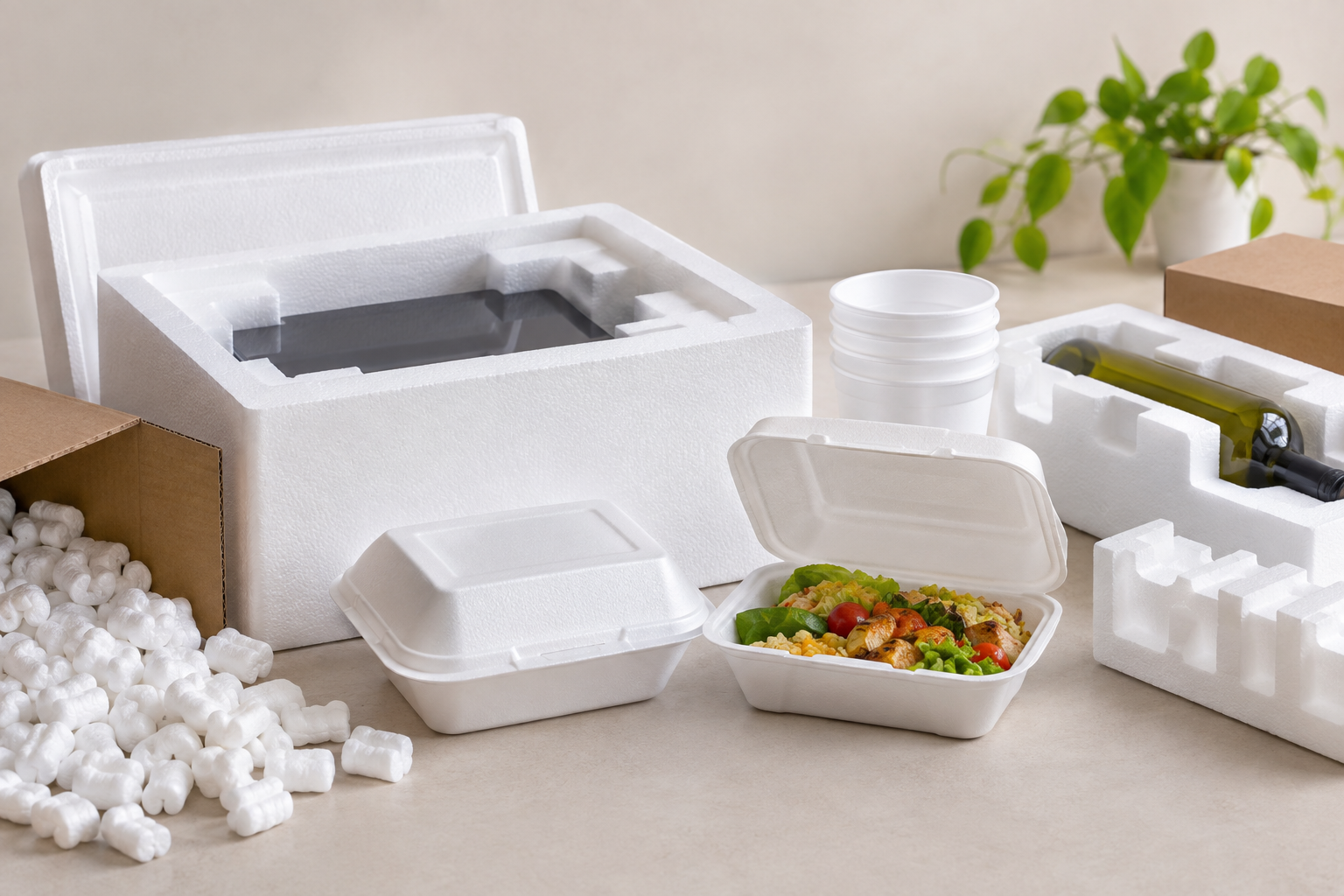
Take a moment to look around your kitchen, office, or local supermarket, and you’ll see polystyrene nearby. The clear crisper tray in your fridge, the sturdy clamshell packaging protecting fresh produce, the foam cup holding your morning coffee, the sterile petri dish in a lab, and the sleek casing of your TV remote are all made from one type of polymer: polystyrene. After decades of competition from other materials, polystyrene remains the preferred option in food service, healthcare, electronics, and construction. In this blog, Supreme Petrochem Ltd, India’s largest polystyrene producer with an installed capacity of 300,000 TPA, explores why polystyrene in packaging and other uses continues to outperform alternatives. We will discuss what makes its two main grades, general-purpose polystyrene (GPPS) and high-impact polystyrene (HIPS), so essential to modern manufacturing.
This blog covers the science, performance, and practical uses that explain polystyrene’s lasting dominance. We will delve into what polystyrene is made of, the key differences between its major types, how its mechanical properties influence material choices, why the transparency of GPPS makes it the favoured option for food-contact applications, and how the impact strength of HIPS provides an advantage in durability-critical markets. Whether you are a procurement specialist, a product designer, or simply curious about the materials that shape everyday life, this guide is for you.
What Is Polystyrene Made Of, and Why Does the Chemistry Matter?
At its core, polystyrene is a synthetic aromatic hydrocarbon polymer made from styrene monomer, which is produced from petroleum in the petrochemical refining process. Styrene monomers link together through polymerisation to form long polymer chains, resulting in a hard, lightweight, and highly versatile thermoplastic. This chemistry defines all of polystyrene’s main characteristics: rigidity, clarity, ease of processing, and low density.
The base polymer, polystyrene, in its unmodified form, is transparent and rigid. When manufacturers add polybutadiene rubber during polymerisation, the material changes into a two-phase microstructure that absorbs mechanical stress, resulting in high-impact polystyrene. This chemical difference between GPPS and HIPS has major practical implications for the markets each grade serves.
Supreme Petrochem’s product range reflects this chemistry in detail. The company produces multiple grades of both general-purpose polystyrene and high-impact polystyrene, each designed with specific profiles of clarity, flow behaviour, heat distortion temperature, gloss, and toughness. This is not a one-size-fits-all material; it is a family of precision-engineered grades.
What Are the Different Types of Polystyrene Used in Industry?
Polystyrene comes in several types, each suited for different applications. Knowing the key types is crucial for anyone involved in material specification or product development.
• General Purpose Polystyrene (GPPS): The unmodified, transparent grade. Known for excellent clarity, rigidity, and dimensional accuracy. Ideal for food-contact items, medical labware, and high-quality packaging.
• High Impact Polystyrene (HIPS): Modified with polybutadiene rubber for improved impact strength. Opaque and tough, with high-gloss options available. Used in appliance components, electronics housings, and refrigerator liners.
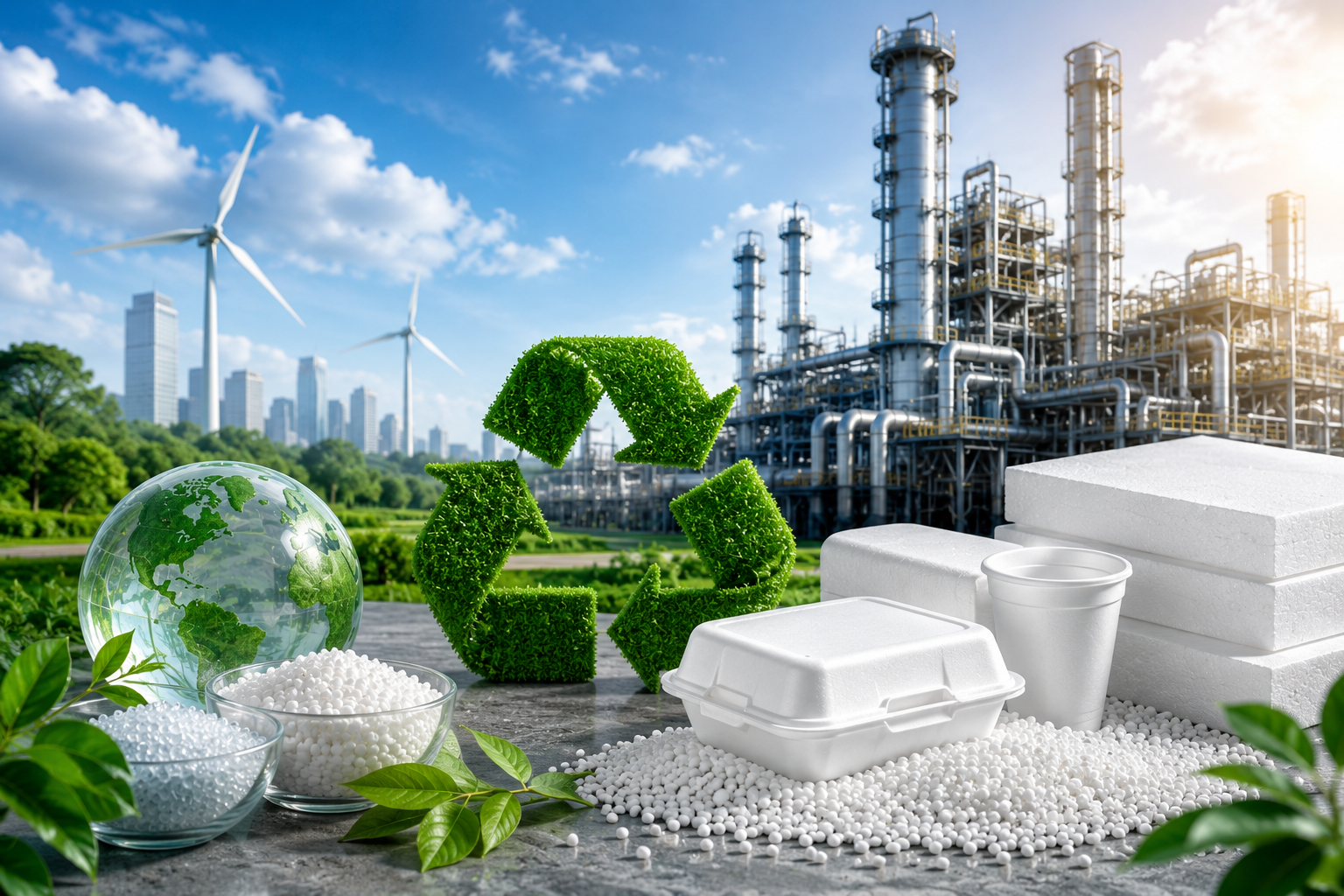
• Expanded Polystyrene (EPS): A foamed version created by expanding polystyrene beads with a blowing agent. Lightweight and thermally insulating. Commonly used in protective packaging and construction insulation boards.
• Extruded Polystyrene (XPS): A closed-cell foam made through an extrusion process. Offers excellent moisture resistance and compressive strength. Especially valued for thermal insulation in construction, such as Supreme Petrochem’s INSUboard XPS range.
It’s important to note that polystyrene is not the same as Styrofoam. “Styrofoam” refers to a trademarked brand owned by Dow Chemical, specifically extruded polystyrene foam used for insulation. The term is often misused to describe any foam polystyrene product. The foam cups and trays, often called “styrofoam”, are usually made from expanded polystyrene (EPS), not the branded Styrofoam product.
Why Is Polystyrene Used in Food Packaging? A Closer Look at GPPS Industrial Applications
The food service and food packaging sectors have depended on general-purpose polystyrene for good reasons. Polystyrene’s transparency, which lets light pass through with minimal distortion, gives GPPS a glass-like quality that alternatives like polypropylene or polyethene can’t match at a comparable cost. When consumers can clearly see the contents of a container, it builds trust, communicates freshness, and enhances the perceived quality of the product inside.
Supreme Petrochem’s GPPS industrial applications cover a wide range of food-contact and related categories:
• Refrigerator crisper and egg trays, where clarity and stability at standard refrigeration temperatures are crucial.
• Disposable dinnerware, including clear cups, plates, and food containers that must meet food safety standards.
• OPS (Oriented Polystyrene) films: thin, transparent, biaxially oriented sheets used in food packaging, label films, and display wraps that need exceptional clarity and stiffness.
• Toothbrush handles and personal care containers, where a clean, precise finish is as important as mechanical function.
• Medical labware like petri dishes, tissue culture dishes, droppers, and diagnostic disposables is valued for its transparency, radiation stability, and chemical resistance.
The polystyrene mechanical properties that support these applications include high stiffness, excellent dimensional stability, moisture resistance, and consistent processing at scale through injection moulding, extrusion, thermoforming, and blow moulding. These qualities ensure that a GPPS part produced in a high-volume run meets the designer’s dimensional tolerances, batch after batch.
How Does Impact Strength Polystyrene Make HIPS the Go-To Grade for Durability?
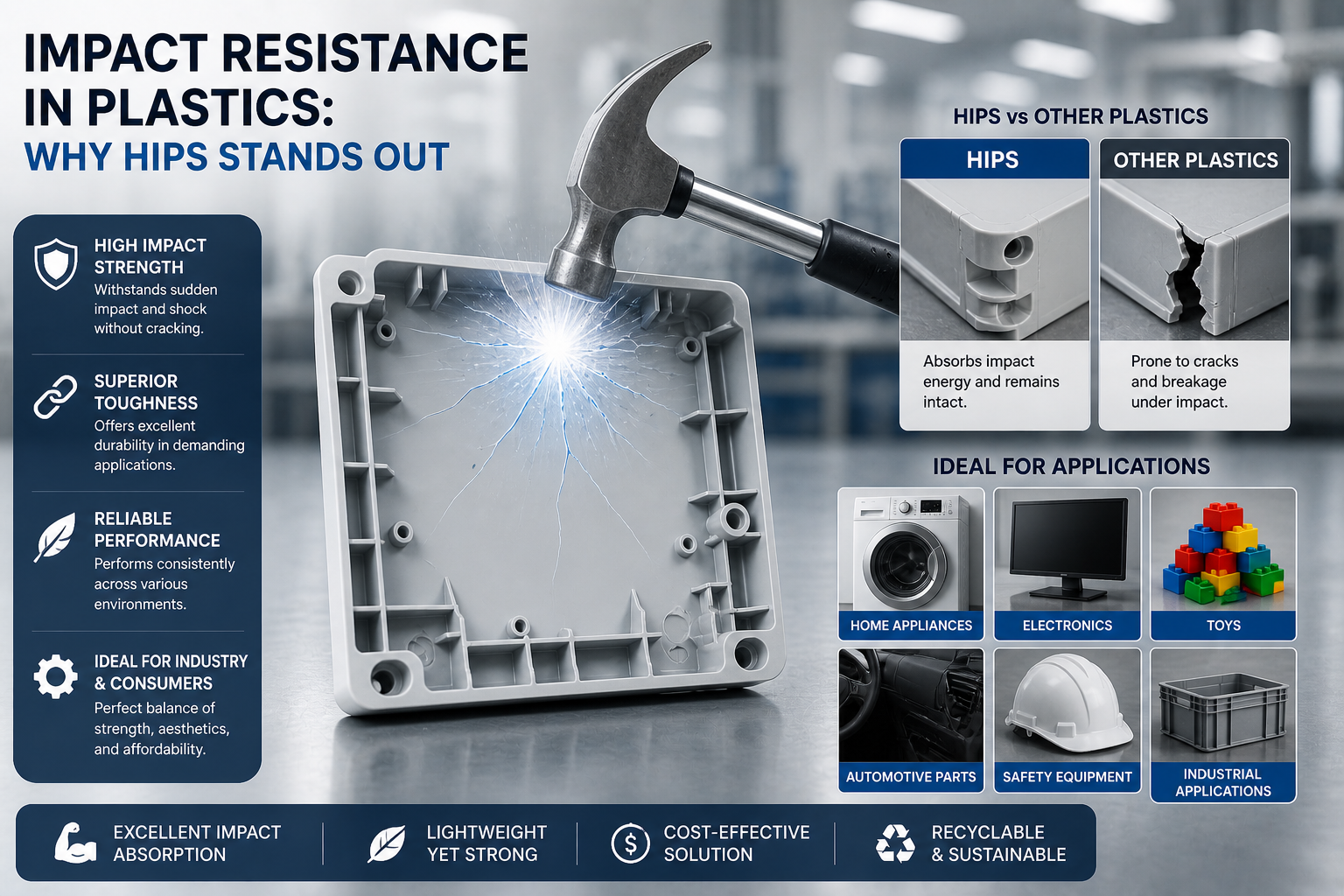
While general-purpose polystyrene excels in optical clarity, high-impact polystyrene leads in toughness. Introducing polybutadiene rubber into the polymer matrix creates a two-phase microstructure that absorbs and dissipates impact energy, preventing it from turning into cracks. The result is a material that can withstand drops, vibrations, rough handling, and mechanical stress that would cause unmodified polystyrene to break.
This impact strength advantage largely drives HIPS industrial applications in today’s market:
• Refrigerator inner liners and door liners, where the material must withstand years of moisture, cleaning agents, and temperature changes without cracking or discolouring.
• Consumer electronics housings for televisions, computer peripherals, and home entertainment systems, where a glossy finish is expected alongside structural strength.
• Institutional equipment panels and enclosures, where durability and resistance to physical damage are essential.
• Packaging for heavier consumer goods that require protective strength during shipping and handling.
Supreme Petrochem’s HIPS range offers different grades with varying levels of toughness, gloss, heat distortion temperature, and Environmental Stress Crack Resistance (ESCR). ESCR is crucial for appliance liners that come into contact with household detergents and cleaning sprays. A liner that develops stress cracks after repeated exposure would compromise both appearance and structure, an outcome manufacturers cannot afford. The mechanical properties of HIPS grades are therefore designed not just for impact resistance but for long-lasting reliability in chemically harsh environments.
Rigid Plastic Comparison: Why Polystyrene Holds Its Own Against Competing Materials
In any comparison of rigid plastics, polystyrene consistently stands out for clear reasons. While materials like polypropylene (PP), acrylonitrile butadiene styrene (ABS), and polyethylene terephthalate (PET) each have their strengths, none match the overall combination of properties that GPPS and HIPS offer within their niches.
Compared to polypropylene, GPPS offers superior optical clarity and better surface gloss, making it ideal for high-quality packaging. HIPS, on the other hand, excels over PP in terms of surface finish quality and printing compatibility, both of which are important for consumer electronics and branded packaging that require sharp graphics. In electronics applications, HIPS often offers a similar look to ABS but at a lower processing cost, making it the choice for mid-tier and high-volume products.
Processing flexibility is another important aspect of this comparison of rigid plastics. Both general-purpose polystyrene and high-impact polystyrene are well suited to injection moulding, extrusion, thermoforming, and blow moulding. This means manufacturers using both grades can operate the same equipment across product lines, switching between GPPS and HIPS by selecting the correct grade and adjusting process settings, rather than investing in separate machines. This compatibility provides a significant operational advantage in factories with multiple products.
What Is Polystyrene Used for in Construction, and Is It Safe?
Beyond packaging and consumer products, polystyrene plays a critical structural role in the construction industry. This aspect is often overlooked in discussions about the material’s importance. Expanded polystyrene (EPS) and extruded polystyrene (XPS) provide thermal and acoustic insulation in residential, commercial, and industrial buildings. Their low thermal conductivity, moisture resistance, and lightweight nature make them effective solutions for walls, floors, roofs, and foundations.
Supreme Petrochem‘s INSUboard range of XPS boards offers closed-cell insulation designed for high compressive strength and long-term thermal performance. Unlike some insulation materials, XPS does not absorb water. This means it maintains its insulating properties even in damp conditions, which is important for basements, podium slabs, and cold storage facilities.
Regarding safety, regulatory authorities, including the US Food and Drug Administration (FDA) and the European Food Safety Authority (EFSA), classify polystyrene as safe for food contact within defined parameters. As a solid plastic, it does not release harmful levels of styrene monomer under normal use. The material is also physiologically inert, which is why it is commonly used in medical labware. While no material is entirely without limitations, the general consensus is that when used correctly, polystyrene does not pose significant health risks in everyday applications.
Polystyrene Mechanical Properties: The Technical Case for Continued Use
Understanding polystyrene mechanical properties is essential for material selectors across various industries. Both GPPS and HIPS provide characteristics well-suited to high-volume manufacturing demands:
• High stiffness and rigidity: Polystyrene’s modulus of elasticity makes it resistant to deformation under load, which is why it is used in structural components like refrigerator crisper trays and electronics enclosures.
• Dimensional stability: Low shrinkage and excellent mould-filling properties ensure that polystyrene parts are accurate and consistent across large production runs.
• Moisture resistance: Polystyrene does not readily absorb water, preserving its structural and aesthetic qualities in humid environments.
• Chemical resistance: This is especially important for medical and laboratory applications. Polystyrene resists a wide range of organic compounds and solvents under standard conditions.
• Processability: Few thermoplastics process as cleanly and efficiently as polystyrene. Its predictable melt flow behaviour, lower processing temperatures than those of engineering plastics, and compatibility with standard tools help lower production costs and cycle times.
These combined mechanical properties of polystyrene explain why, despite decades of competition from alternative plastics, polystyrene remains dominant in food packaging, medical labware, consumer electronics, and white goods. The material provides a balance of performance and cost that remains unmatched for these specific uses.
Frequently Asked Questions
No. “Styrofoam” is a trademarked name referring to extruded polystyrene foam made by Dow Chemical and used mainly for building insulation. The lightweight foam trays and cups often called “styrofoam” in everyday conversation are actually made from expanded polystyrene (EPS), which is a different product. Rigid polystyrene packaging (GPPS and HIPS) is a separate category. The three solid general-purpose polystyrene, EPS foam, and Styrofoam XPS all belong to the same polymer family but are produced and used differently.
Expanded polystyrene (EPS) is made by expanding polystyrene beads with steam, creating a lightweight open-cell foam structure that is good for protective packaging and basic thermal insulation. Extruded polystyrene (XPS) is made by forcing molten polystyrene through a die along with a blowing agent, resulting in a closed-cell foam with superior compressive strength and moisture resistance. XPS is usually preferred for below-grade construction insulation, such as foundations and podium slabs, and for cold storage applications where long-term moisture exposure would harm EPS performance. Supreme Petrochem’s INSUboard XPS range is specifically designed for these demanding construction environments.
Polystyrene is technically recyclable; it has the resin identification code #6, but recovery rates have been low due to logistical challenges with collection, contamination, and the economics of processing. Rigid polystyrene (GPPS and HIPS) is easier to recycle than foam EPS, as it can be mechanically ground and reprocessed. The recycling infrastructure for polystyrene is improving, and many manufacturers are investing in closed-loop recycling systems. Consumers should check local authority guidelines since kerbside collection availability varies by region. Supreme Petrochem is committed to sustainable practices in its manufacturing operations.
Polystyrene begins to soften at around 100°C and melts between 210°C and 250°C, depending on the specific grade and formulation. For food packaging, this means rigid polystyrene containers are not suitable for conventional ovens or very high-temperature foods. They are fine for refrigerated storage and ambient-temperature use, which covers most food-service packaging scenarios. The polystyrene mechanical properties in packaging grades are specifically optimised for the temperatures encountered during food storage and distribution, not high-heat cooking. When heated beyond its design limits, polystyrene can deform and possibly release small amounts of compounds. This is why it is important to use packaging materials within their intended temperature limits.