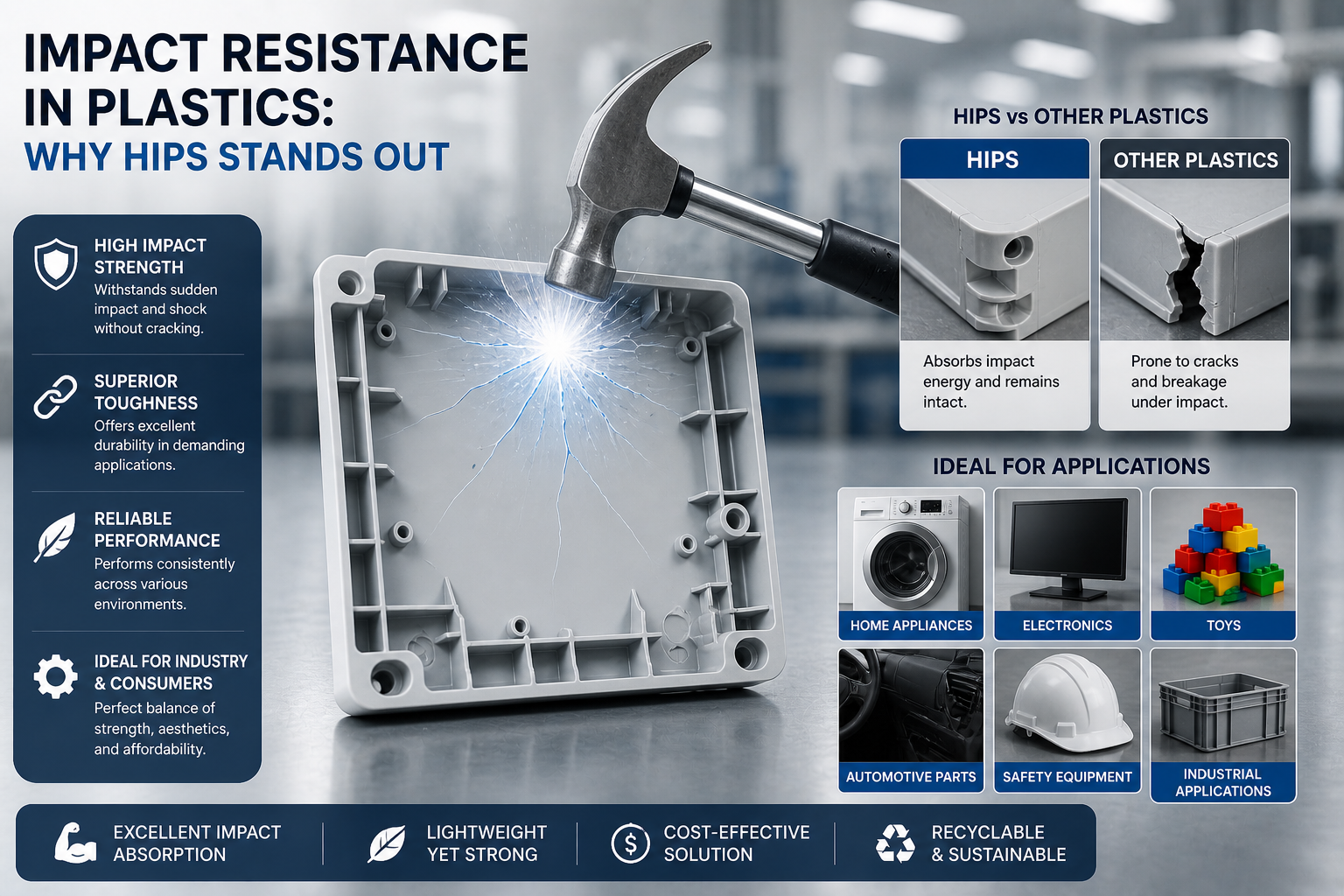
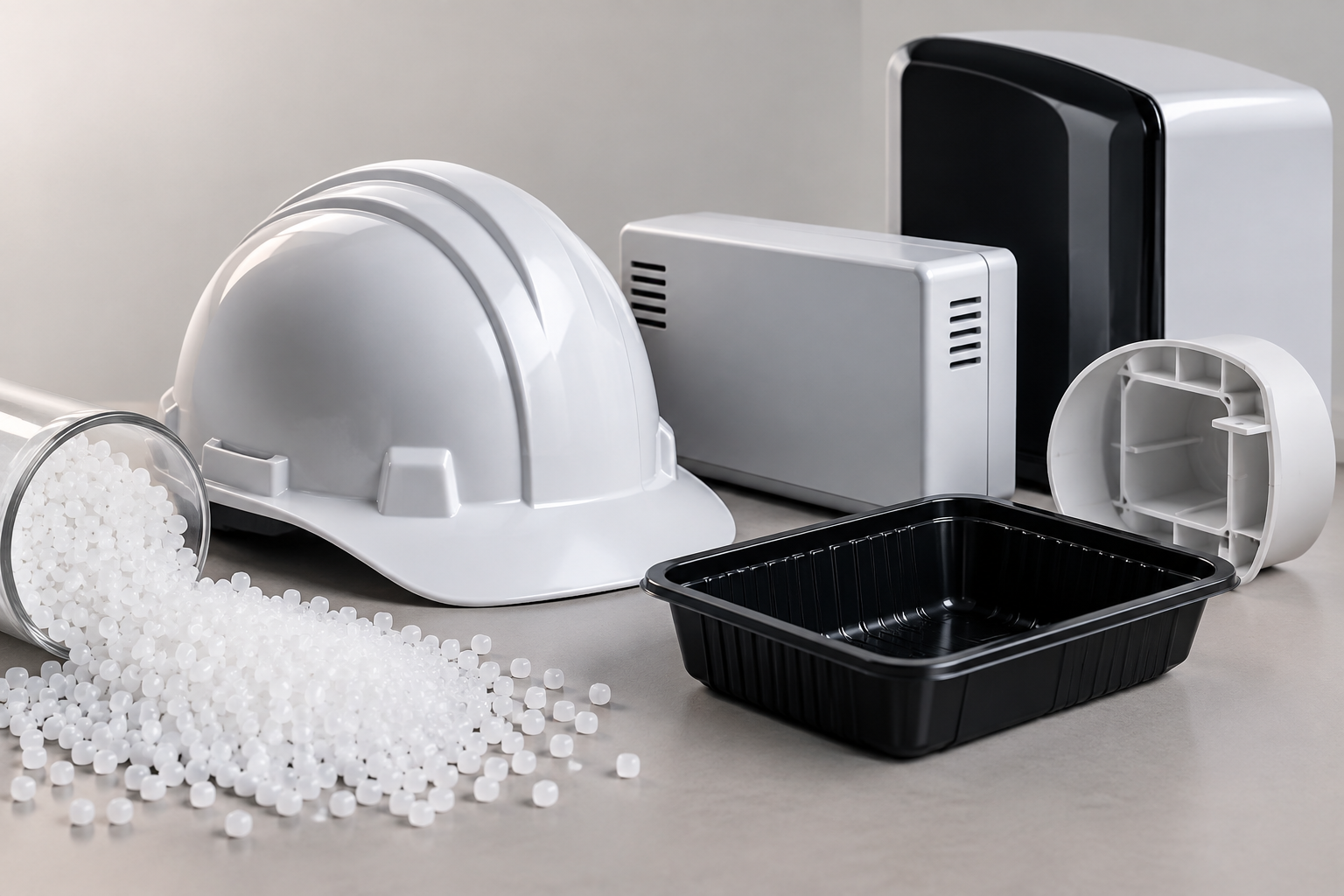
High Impact Polystyrene (HIPS) changes product design by combining toughness with easy processing in polystyrene. This type of polystyrene plastic improves durability in tough applications, ranging from household appliances to industrial casings.
Supreme Petrochem explores how HIPS strengthens resilience in various sectors. We look at its properties, applications, comparisons with other polystyrene types, and insights from our leadership in polystyrene plastic manufacturing.
What Makes High Impact Polystyrene (HIPS) a Durability Champion
High Impact Polystyrene (HIPS) is an opaque thermoplastic that has polybutadiene rubber added to it, increasing the impact strength of standard polystyrene by 5 to 10 times. This change keeps polystyrene’s easy moulding while adding superior toughness, making it ideal for products that can be dropped or knocked.
With a good mix of gloss, environmental stress crack resistance (ESCR), and flow properties, HIPS is suitable for injection moulding intricate parts. Densities are around 1.03 to 1.06 g/cm³, providing lightweight durability without added weight.
Supreme’s grades highlight these benefits: high-flow variants resist breaking in thin-walled toys, while ESCR-enhanced ones withstand refrigerants in appliance liners. These qualities fill the gaps where brittle crystal polystyrene fails.
Key Properties Enhancing Durability in HIPS
HIPS stands out with notched Izod impact strength over 2.5 kJ/m², greatly exceeding the fragility of general purpose polystyrene (GPPS). Heat distortion temperatures ranged from 80 to 95°C, ensuring stability in warmer environments such as AC grills.
Gloss levels reaching 70% provide visual appeal alongside mechanical strength, which is important for items consumers see. Its excellent processability, with melt flow indices of 3-10 g/10 min, reduces defects in high-speed production.
ESCR against substances like cyclopentane prevents cracking in foam-contact applications. This combination makes HIPS a versatile polystyrene plastic for designs focused on longevity.
HIPS in Industrial Applications: From Appliances to Machinery
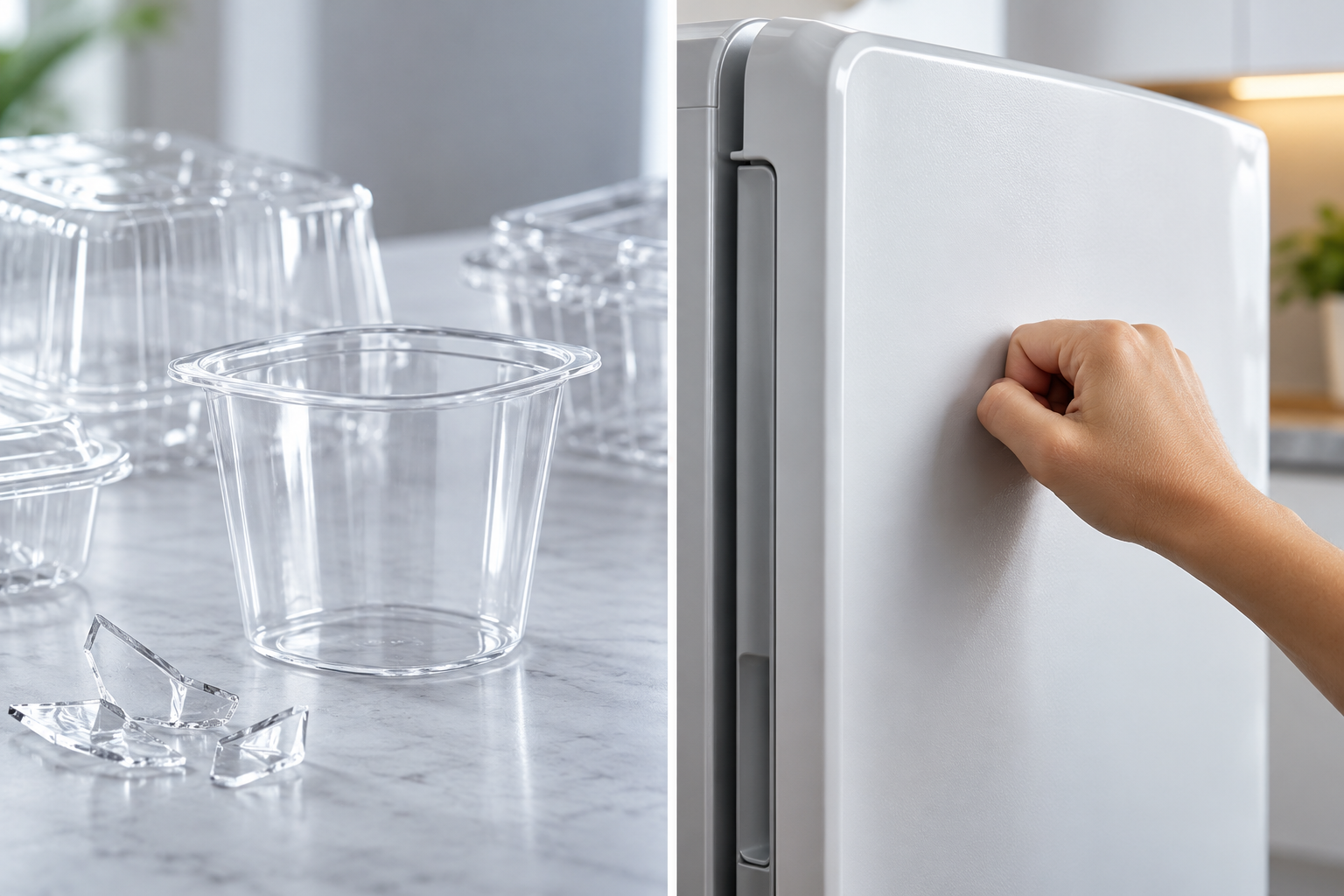
In industrial settings, HIPS strengthens refrigerator door liners and cabinet shells, helping them resist dents from daily use. Its chemical resistance protects against oils and cleaners in business machines and TV cabinets.
Gas-assisted injection moulding uses HIPS for large, hollow parts like washing machine components, cutting weight by 20% compared to metal. Matte-finish grades improve printability for retail displays and signage and withstand indoor conditions.
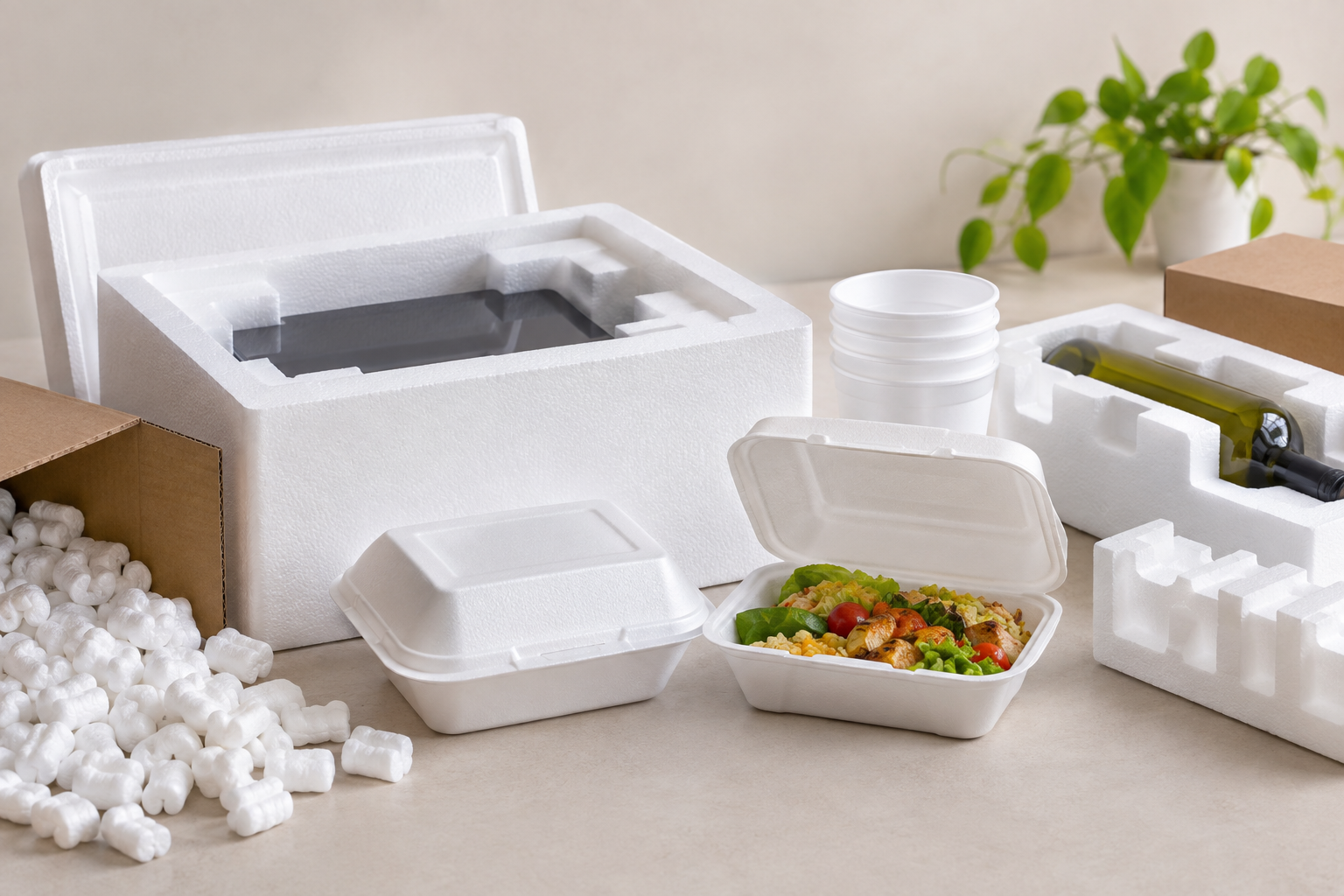
EPS resin manufacturers frequently use HIPS as carrier resins, blending them for custom compounds. This combination increases industrial foam durability without sacrificing formability.
Boosting Consumer Products with High-Impact Polystyrene
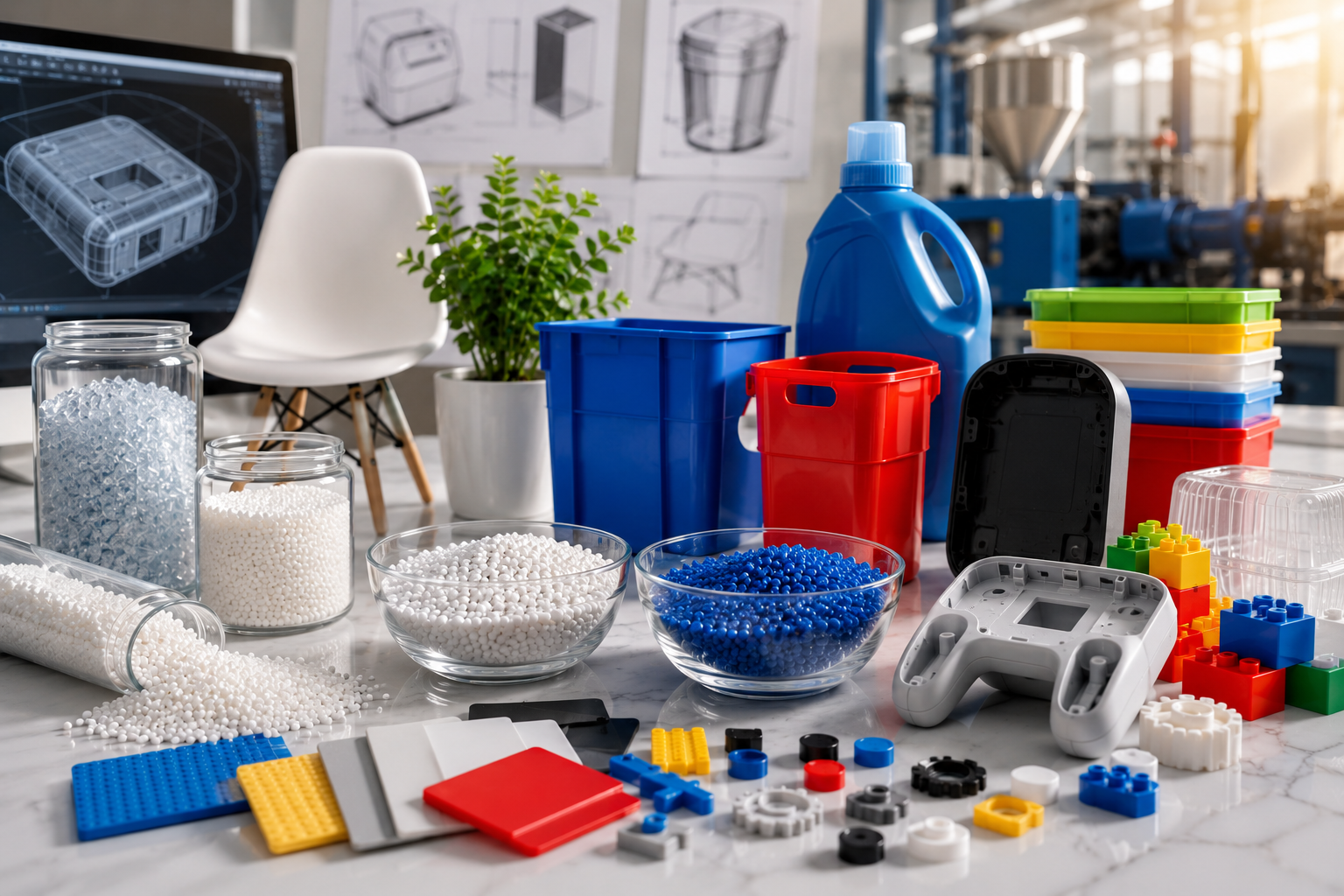
Consumer items benefit from HIPS’s child-safe toughness: toys can withstand rough play, cutlery resists breaking, and hangers handle loads. Ball pens and stationery items enjoy high-gloss barrels that keep their shine over time.
In kitchenware, HIPS produces strong picnic coolers and dairy packaging, where ESCR helps prevent moisture and fat migration. Household novelties and office accessories take advantage of its mix of strength and appeal for repeated use.
Compared to fragile alternatives, HIPS extends product lifespans, lowering replacement costs for end users.
HIPS vs Crystal Polystyrene and General-Purpose Polystyrene
Crystal polystyrene (GPPS) is clear but shatters easily, making it fit for transparent displays rather than high-stress situations. HIPS offers impact resistance instead of clarity, making it ideal for opaque, durable casings where visibility is less important.
General purpose polystyrene processes similarly but lacks rubber toughening, limiting it to low-impact uses. HIPS bridges this gap, delivering polystyrene’s affordability with greater strength, essential for cost-sensitive industrial scaling.
Supreme’s portfolio illustrates this: GPPS for optics, HIPS for strength.
High Impact Polystyrene in Packaging and Thermoforming Excellence
Extrusion-grade HIPS produces sheets for yoghurt tubs, ice cream cups, and electronic wrappers, providing tamper-evident strength. Thermoforming yields products with even thickness, resisting punctures in frozen foods.
Unlike brittle polystyrene, HIPS handles bending in portion packs, prolonging shelf life. Its printability allows for vibrant branding, enhancing retail appeal.
Spotlight on Supreme Petrochem’s HIPS Innovations
Supreme Petrochem, India’s leading polystyrene producer with a capacity of 300,000 TPA, creates HIPS grades like high-flow for toys and AC grills, balanced for electrical appliances, and ESCR-enhanced for fridge liners.
ISO-certified testing guarantees that gloss, toughness, and flow exceed standards, with moisture-proof packaging ensuring smooth supply. From masterbatches to expanded polystyrene collaborations, Supreme delivers tailored polystyrene plastic for business excellence.
Our Styrex series supports sanitary ware, computer accessories, and small appliances, highlighting reliability.
Processing Techniques Optimising HIPS Durability
Injection moulding at 220 to 260°C leverages HIPS’s low viscosity to achieve thin walls under 1mm, with cycle times of less than 25 seconds. Gas-assist versions for large TV cabinets reduce material use by 15-25%.
Extrusion shapes profiles and sheets, while annealing boosts ESCR. Blow moulding creates hollow toys, using toughness for safety compliance.
Sustainability Edge of High-Impact Polystyrene
HIPS can be recycled through #6 resin ID, promoting closed loops for appliance waste into new products. Energy-efficient production lowers environmental impact compared to metals, with 40% less embodied carbon.
Supreme incorporates recyclates, supporting circular goals. EPS resin manufacturers gain from HIPS carriers in lightweight foams.
Cost Benefits Driving Polystyrene Plastic Adoption
HIPS is cheaper than engineering plastics by 40 to 50%, combining performance with affordability for mass production. High yields of over 500 kg/hour enable rapid recovery of tooling costs.
In consumer electronics, HIPS offers a premium feel at economical prices.
Emerging Innovations in HIPS for Tougher Products
Additive-enhanced HIPS increases flame-retardant performance in electronics, while nano-fillers improve stiffness by 20%. Research into bio-styrene aims to develop greener, high impact polystyrene.
Smart hybrids with ABS are targeted at automotive trims.
Overcoming Challenges in HIPS Applications
Warping is lessened using balanced flow grades, while UV degradation is managed with stabilisers. Supreme’s matte HIPS reduces glare in displays.
Polystyrene Variants Comparison Table
| Property | HIPS | GPPS | EPS |
| Impact Strength | High (2.5+ kJ/m²) | Low | Foam-dependent |
| Clarity | Opaque | Excellent | Low |
| Applications | Appliances, Toys | Displays | Insulation |
| Cost | Medium | Low | Lowest |
| Processability | Excellent | Excellent | Foam-specific |
HIPS leads in durability niches.
In conclusion, High Impact Polystyrene (HIPS) turns polystyrene into a strong option for industrial and consumer markets. Supreme Petrochem’s expertise ensures reliable, innovative polystyrene plastic solutions. As the demand for durability grows, HIPS remains a solid choice.
Frequently Asked Questions
HIPS adds rubber for impact toughness, while GPPS is clear but brittle.
Yes, through #6 streams, supporting sustainable polystyrene cycles.
Fridge liners, AC grills, and TV cabinets benefit from ESCR and toughness.
EPS provides insulation through foam; solid HIPS offers rigid durability.