India’s petrochemical industry has undergone significant change over the past three decades, growing from a young sector into one of the most dynamic parts of the national economy. At the centre of this transformation is polystyrene, a synthetic polymer vital to how modern India manufactures, packages, builds, and consumes. In this blog, INSUboard examines how India’s largest polystyrene manufacturer, India Supreme Petrochem Ltd (SPL), has become essential to the country’s styrenics supply chain, and why the demand for polymer packaging solutions India-wide is set to keep growing well into the next decade.
From the foam protecting your new appliance to the casing of your television, polystyrene is everywhere, often unseen but rarely absent. As India aims to become a global manufacturing leader, understanding the grades, applications, and main producers of this polymer is essential. Whether you are a converter, packaging professional, or construction specifier, decisions made at the petrochemical industry India level directly affect your supply chain, costs, and product performance. This blog brings together production data, market forecasts, and technical insights to provide a clear overview.
Who Leads Polystyrene Production in India and How Is It Manufactured?
Polystyrene is a synthetic resin produced through the polymerisation of styrene monomer, a process that converts a liquid aromatic compound into solid granules ready for conversion into finished goods. In India, this landscape is dominated by Supreme Petrochem Ltd (SPL), a joint venture between Supreme Industries Ltd and the Rajan Raheja Group. SPL began operations in 1995 at its Amdoshi (Nagothane) plant in Maharashtra with a modest capacity of 66,000 MTPA. Over the past 30 years, that single site has grown into India’s first and only international-scale styrenics complex, covering 337 acres and located approximately 120 kilometres from Mumbai.
Today, SPL’s Amdoshi complex has an installed capacity of 422,000 MTPA and operates four high-technology polystyrene production lines alongside plants for expanded polystyrene, extruded polystyrene insulation boards (XPS), speciality compounds, and masterbatches. Its PS production capacity of approximately 300,000 TPA makes it one of the largest single-location polystyrene producers in Asia. SPL commands over 50% of the domestic market and exports to more than 100 countries.
GPPS, HIPS, and Expanded Polystyrene: Understanding the Key Grades and Their Industrial Uses
General-purpose polystyrene (GPPS) is the clearest variant of a rigid, transparent polymer, offering excellent optical clarity and is widely used in food-service packaging (cups, trays, lids), cosmetic packaging, and medical disposables. SPL manufactures multiple GPPS grades for injection moulding, extrusion, thermoforming, and blow moulding, offering the transparency, rigidity, and dimensional stability that food-safe and display applications demand.
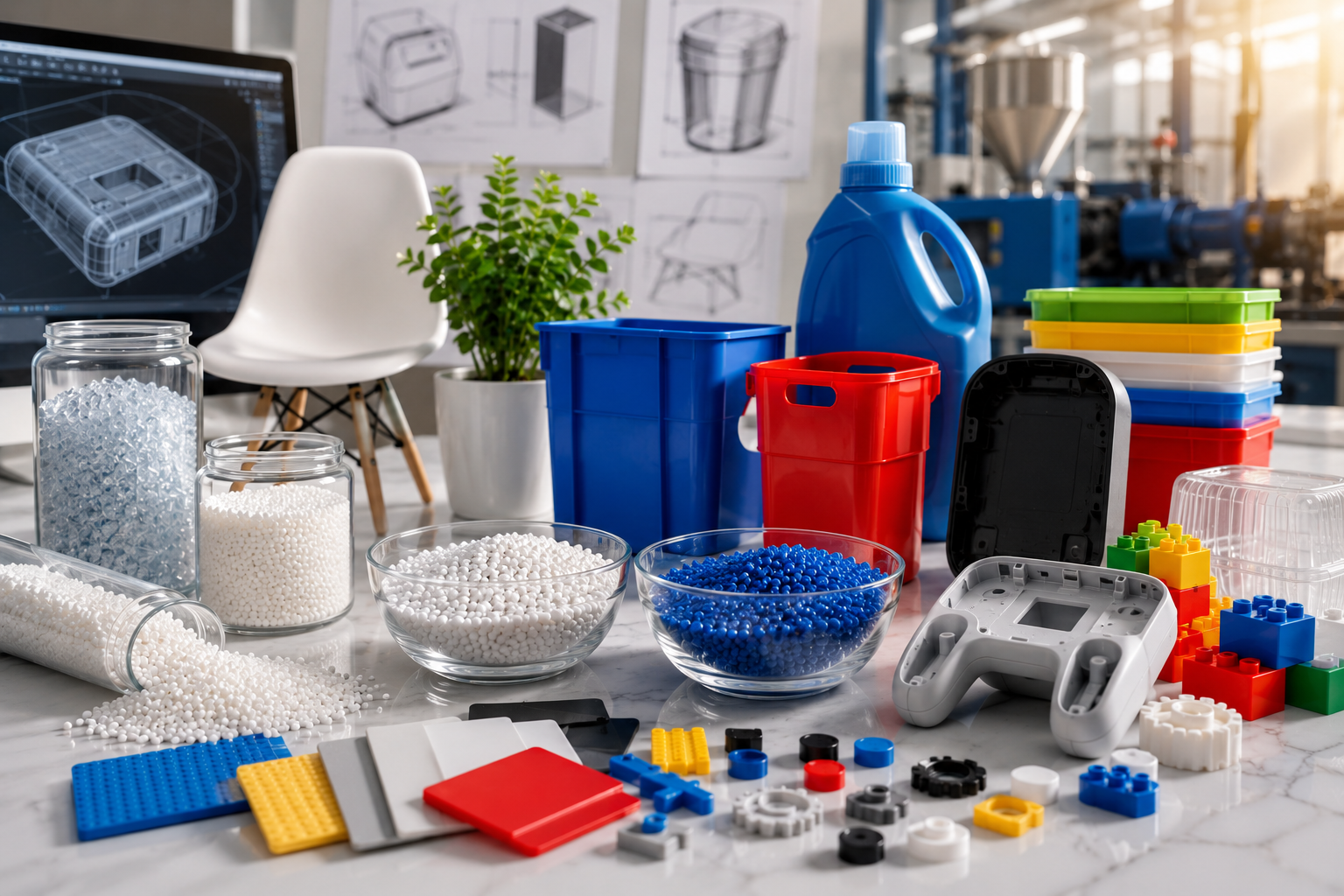
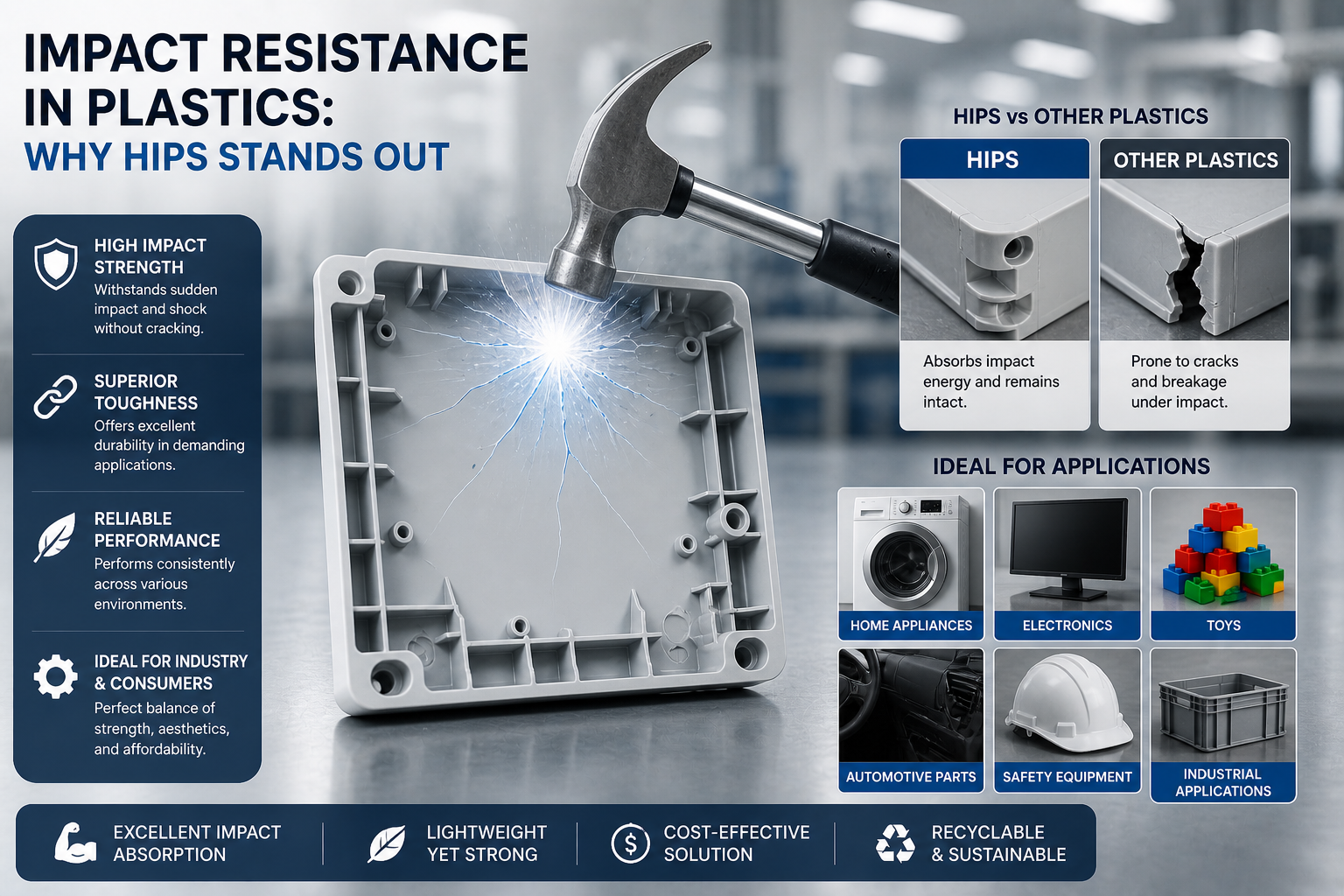
High impact polystyrene (HIPS) incorporates polybutadiene rubber, delivering significantly improved toughness and impact resistance. The result is an opaque, durable material used in household appliance casings, consumer electronics housings, refrigerator liners, toys, and automotive interior trim. SPL’s HIPS grades are formulated for precise combinations of heat distortion, flow behaviour, and surface finish, meeting the requirements of India’s fast-growing appliance and electronics sectors.
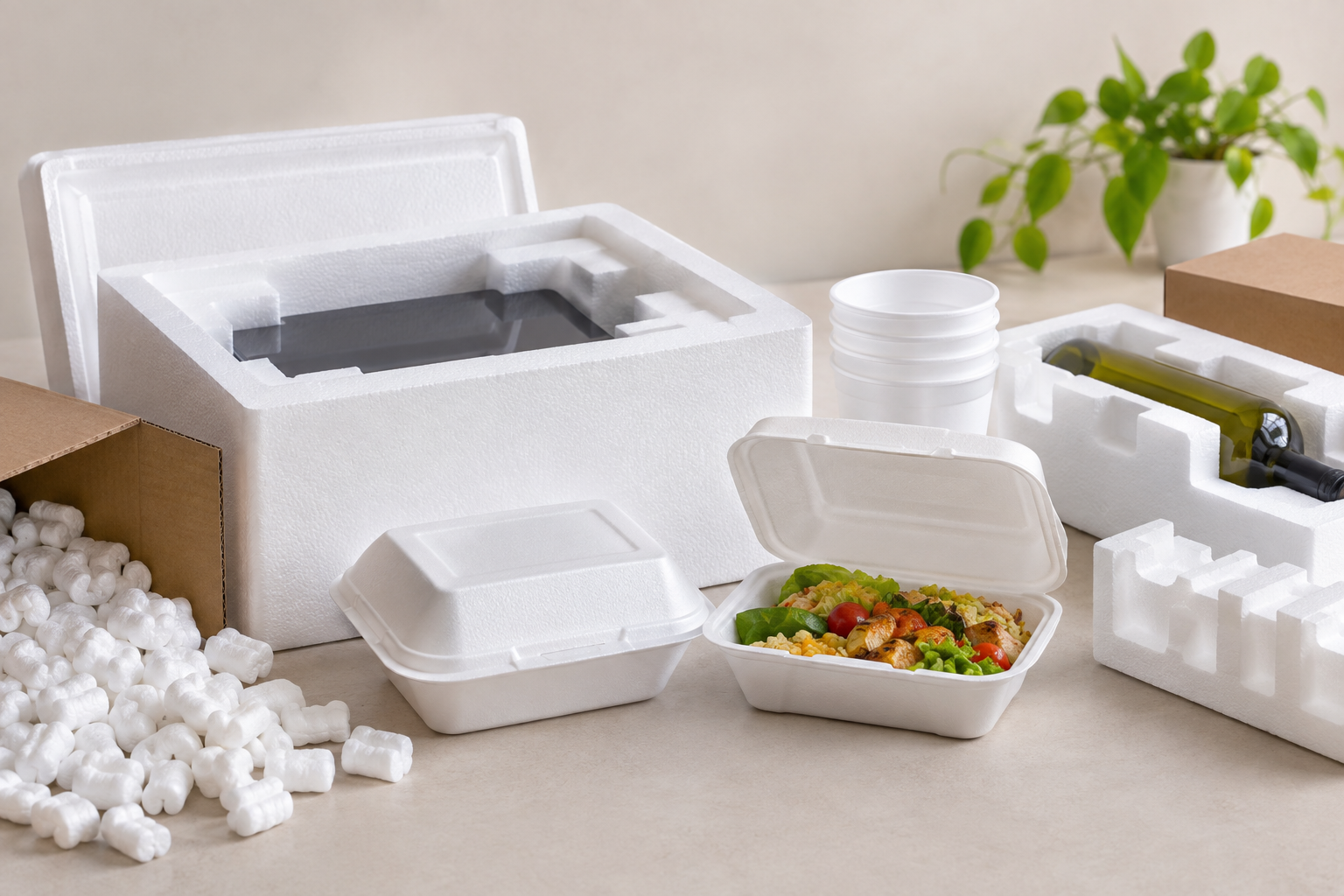
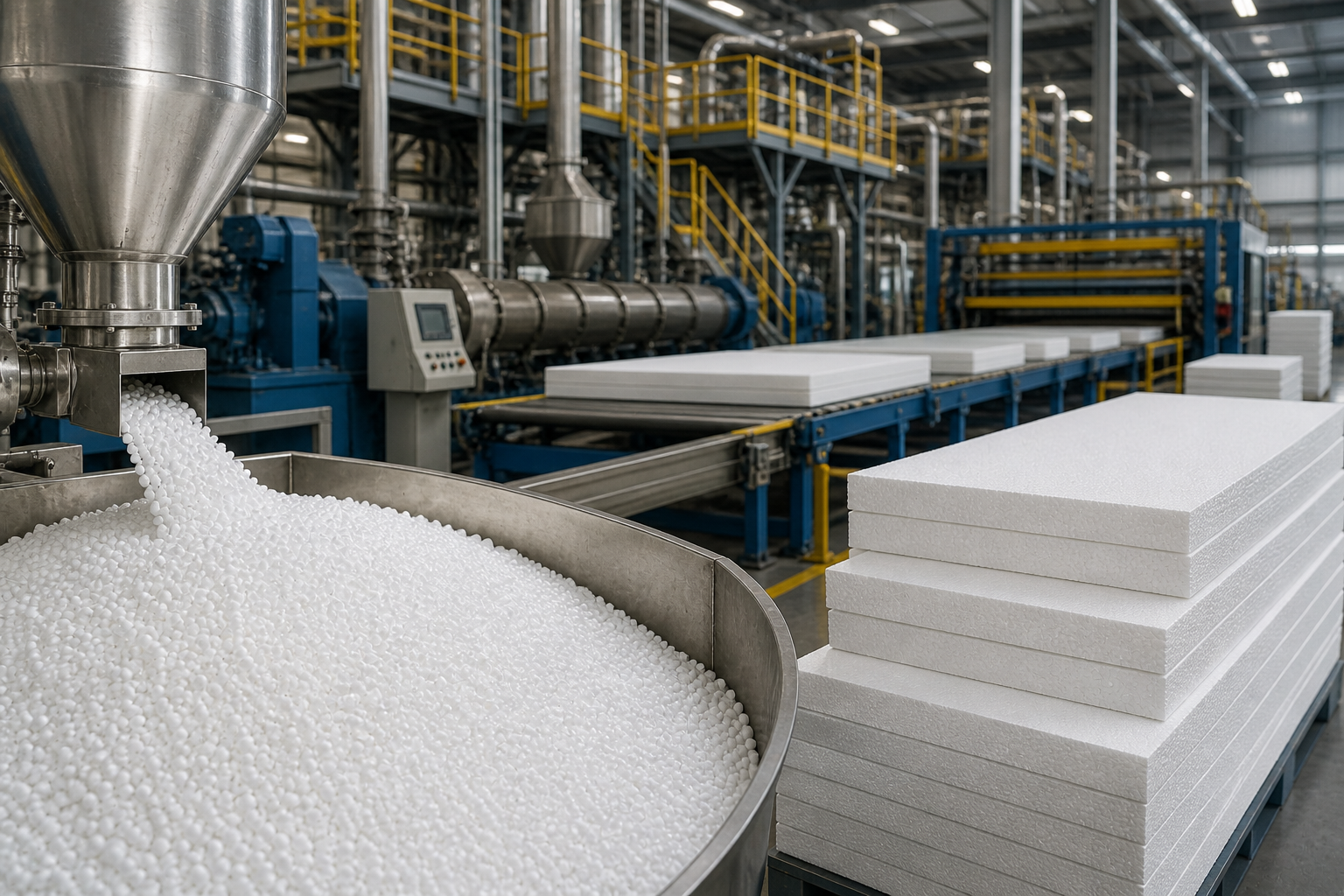
Expanded polystyrene (EPS) is the white, lightweight foam familiar from appliance packaging and cold-chain boxes, produced by expanding polystyrene beads to 40–50 times their original volume using steam. SPL operates an EPS capacity of 118,000 TPA at Nagothane and 33,000 MTPA at its second plant in Chennai. SPL also operates India’s only plant for Extruded Polystyrene Insulation Foam Board (XPS), a denser, higher-performance insulation used in construction applications that require both compressive strength and thermal efficiency.
Polystyrene Applications in Packaging, Electronics, and Construction
Packaging is the single largest end-use sector for polystyrene. The growth of e-commerce, food delivery, and modern retail has created unprecedented demand for lightweight, cost-effective polymer packaging solutions India-wide. EPS provides shock absorption and thermal insulation for fragile and perishable goods, while GPPS serves rigid food packaging trays, lids, and disposable containers where clarity and food safety are paramount.
In electronics and consumer appliances, high-impact polystyrene is the workhorse material for the casings of televisions, washing machines, refrigerators, and air conditioners. As India expands domestic electronics manufacturing under Make in India, reliable domestic HIPS supply from a manufacturer of SPL’s scale becomes strategically significant. In building and construction, expanded polystyrene serves as an insulated panel system, a road embankment material, and a void filler, while XPS boards deliver high-performance thermal insulation to support India’s energy-efficiency standards, amplified by the National Infrastructure Pipeline’s target of US$1.4 trillion in infrastructure investment.
India’s Polymer Market Growth and Supreme Petrochem’s Expansion Strategy
The Indian plastics market, of which polystyrene is a key segment, was valued at approximately US$43.68 billion in 2023 and is projected to grow at a CAGR of 6.6% from 2024 to 2030, reaching an estimated US$68.33 billion. (Source: Maximise Market Research, 2024). Globally, the polystyrene market is forecast to grow from roughly US$29.76 billion in 2025 to US$48.72 billion by 2035 at a CAGR of 4.58%. (Source: Roots Analysis, 2025). In the Asia-Pacific region, India is one of the fastest-growing markets, driven by urbanisation, rising incomes, and manufacturing expansion.
To meet this demand, SPL is implementing a Mass ABS project at Amdoshi with a total target capacity of 140,000 MTPA (two phases of 70,000 MTPA each), undertaken with Versalis-Eni Chemicals Group. When the first ABS phase and EPS Phase II expansion are complete, Amdoshi’s total capacity will reach 522,000 MTPA. SPL has also acquired 96 acres in Munak, Karnal, Haryana, where a new facility manufacturing polystyrene, expanded polystyrene, EPS, 3D panels, and PS sheeting lines is planned at an estimated Rs. 800 crores investment funded from internal resources. Additionally, Indian Oil’s planned domestic styrene monomer plant at Panipat (approximately 387,000 TPA) is part of a broader effort to reduce India’s upstream import dependency and strengthen the end-to-end domestic value chain.
Sustainable Polystyrene Production: Supreme Petrochem’s Environmental Commitments
Sustainability is now an operational priority for India’s petrochemical industry. SPL has invested in a 12.5 MW solar power plant in partnership with Tata Renewable Energy Ltd to reduce grid dependence, and has implemented a Zero Liquid Discharge (ZLD) system at Nagothane, ensuring all process water is recycled for horticulture and plant operations. More than 100,000 trees have been planted around the complex. SPL’s shift towards mass ABS production, which eliminates water-borne effluents compared to conventional emulsion processes, reflects a deliberate move toward cleaner manufacturing. The company is also a signatory to the Responsible Care initiative of the Indian Chemical Council, committing to continuous improvement in health, safety, and environmental performance.
India’s journey toward manufacturing self-reliance is closely tied to the health of its petrochemical industry. Supreme Petrochem Ltd.’s growth from a 66,000 MTPA plant in 1995 to a 422,000 MTPA styrenics complex today is both a business success and a demonstration of India’s industrial potential. For businesses relying on reliable polymer packaging solutions India-wide, from appliance manufacturers to food packaging converters, the continued investment and innovation of a domestic polystyrene manufacturer in India, such as SPL’s scale, is foundational. As India’s polymer market approaches US$68.33 billion by 2030, the decisions made today in plant design, grade development, and sustainable manufacturing will shape the competitive landscape for the decade ahead.
Frequently Asked Questions
General-purpose polystyrene (GPPS) is clear, rigid, and transparent, making it well-suited for applications requiring optical clarity, such as food packaging, cosmetic containers, and display items. High impact polystyrene (HIPS) incorporates polybutadiene rubber during production, creating an opaque, significantly tougher material with improved impact resistance. HIPS is used for appliance casings, consumer electronics housings, refrigerator liners, and other applications where durability matters more than transparency.
Supreme Petrochem Ltd (SPL) is the largest polystyrene manufacturer in India, holding a domestic market share exceeding 50%. Founded in 1995 as a joint venture between The Supreme Industries Ltd and the Rajan Raheja Group, SPL operates India’s only international-scale styrenics complex at Amdoshi (Nagothane), Maharashtra, with an overall capacity of 422,000 MTPA and exports to over 100 countries.
Expanded polystyrene (EPS) is used across three primary sectors in India. In packaging, it provides shock-absorbing, thermally insulating protection for appliances, electronics, pharmaceuticals, and perishable foods. In construction, it serves insulated panel systems for walls and roofs, lightweight fill for road embankments, and void formers in structural applications. In food and cold-chain distribution, EPS boxes and containers maintain the temperature and freshness of perishable goods during transit.
India’s petrochemical industry India supports import substitution through two key means. Firstly, domestic producers such as SPL have built large-scale, high-quality polystyrene manufacturing capacity, reducing the need to import finished polymer grades. Secondly, strategic investments like Indian Oil’s planned domestic styrene monomer plant at Panipat aim to reduce India’s reliance on imported styrene feedstock, currently the most significant upstream vulnerability in the supply chain, supporting the broader Atmanirbhar Bharat vision of self-reliant industrial value chains.