At Supreme Petrochem, we believe that truly understanding a material is the first step toward using it well. In this blog, we trace polystyrene plastic from its chemical origins, explaining how styrene polymerisation converts a liquid aromatic hydrocarbon into one of the world’s most versatile polymers, through to the full spectrum of polystyrene applications that define modern manufacturing. Whether you work in packaging, construction, consumer electronics, or industrial supply, this guide provides a clear, practical understanding of a material that shapes the products you encounter every day.
Few materials have as broad an industrial footprint as polystyrene plastic. From television casings to foam insulation panels, from Petri dishes to appliance delivery packaging, polystyrene industrial uses span virtually every sector of the economy. As India’s largest producer of polystyrene and a leading manufacturer of high-performance plastics, Supreme Petrochem brings decades of manufacturing expertise to the most frequently asked questions about this polymer, covering chemistry, grades, processing routes, applications, and how polystyrene compares to other thermoplastic manufacturing choices, such as ABS.
How Is Polystyrene Made? The Styrene Polymerisation Process Explained
Polystyrene plastic begins with styrene monomer, an aromatic hydrocarbon produced by alkylating benzene with ethylene to form ethylbenzene, then dehydrogenating it. The styrene polymerisation reaction is an addition polymerisation process in which the carbon-carbon double bond of each styrene monomer breaks, forming a stronger single bond that links monomers into a growing chain. The reaction proceeds through three stages: initiation, propagation, and termination.
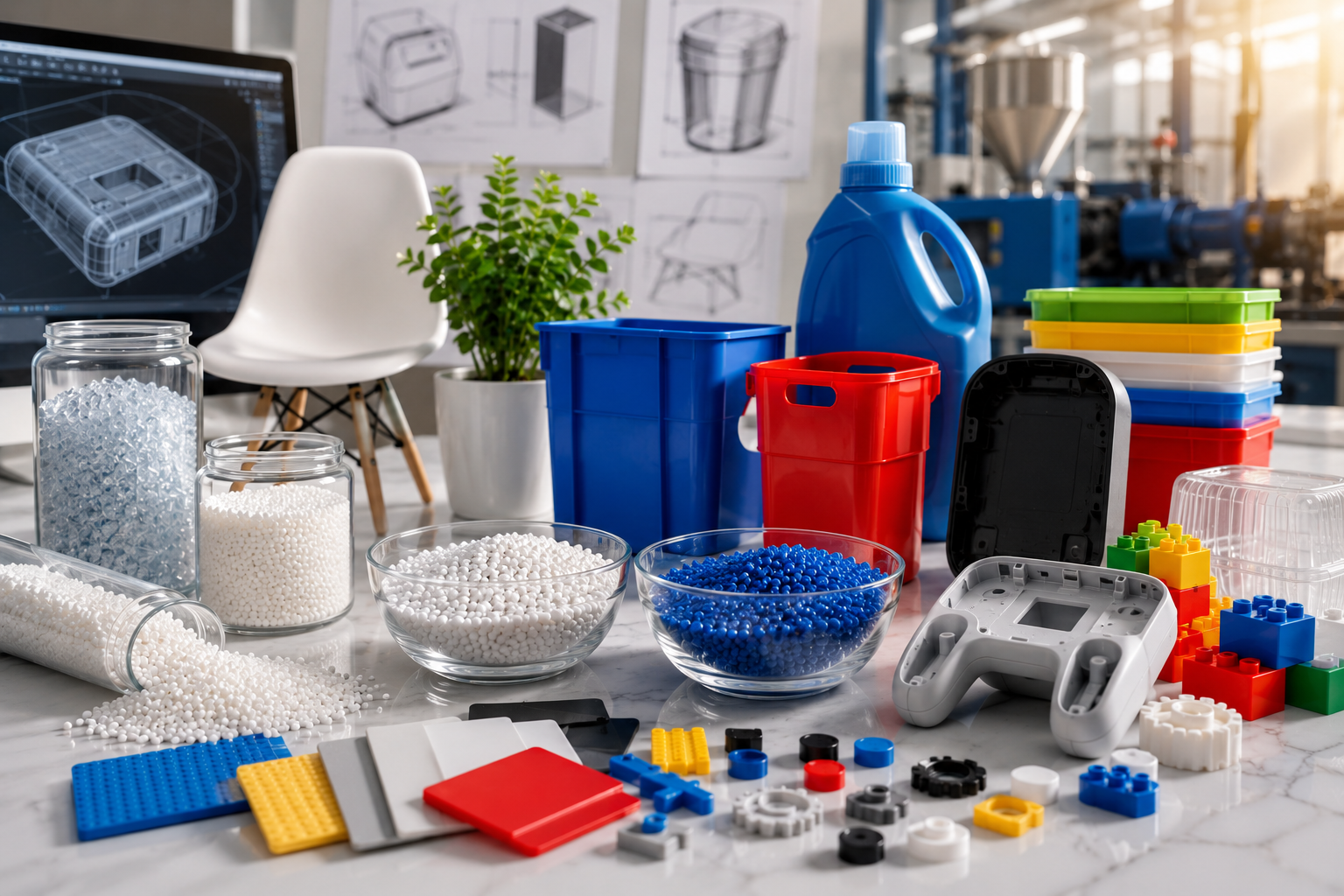
Commercially, the dominant route for thermoplastic manufacturing of polystyrene is continuous bulk (mass) polymerisation at approximately 130–140°C. This produces a polymer of excellent purity and transparency, and is the method used at Supreme Petrochem’s Nagothane plant. The molten polymer is devolatilised to remove unreacted styrene, extruded into strands, cooled, and pelletised into the granules supplied to converters. Suspension polymerisation is the primary route for expandable polystyrene (EPS), incorporating a pentane blowing agent into the beads during the process. In high-impact polystyrene (HIPS), polybutadiene rubber is dissolved in the styrene feed before polymerisation and incorporated into the final polymer structure.
GPPS, HIPS, EPS, and XPS: Polystyrene Grades and Their Industrial Uses
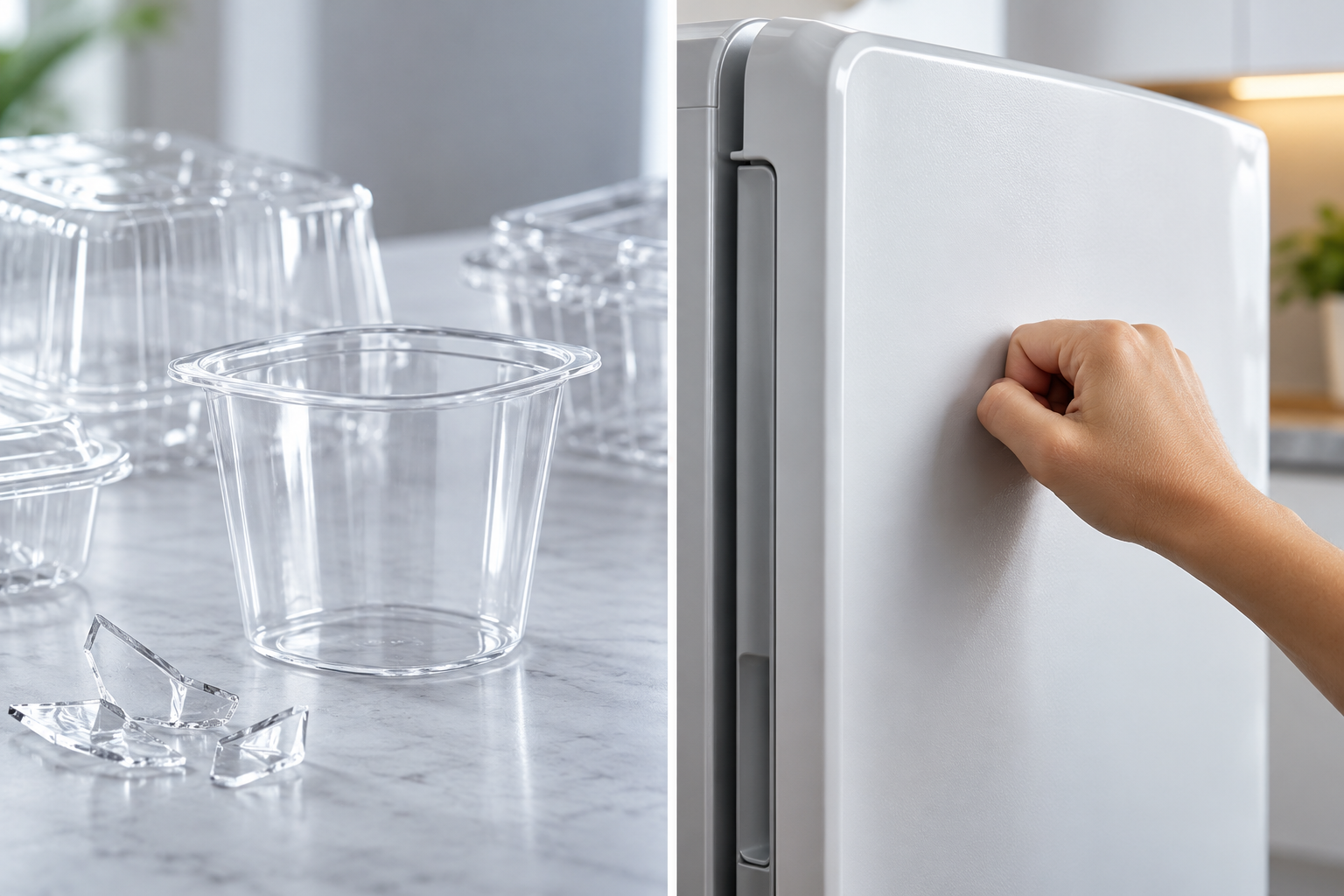
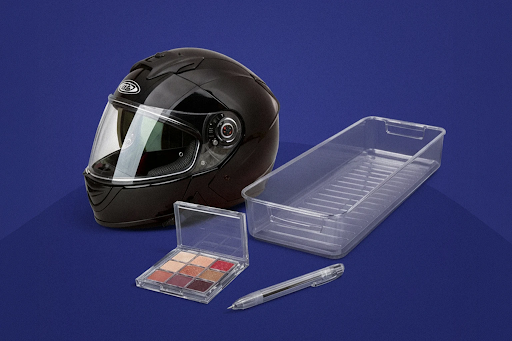
General-Purpose Polystyrene (GPPS) crystal polystyrene is a rigid, naturally transparent polymer with excellent optical clarity, low moisture absorption, and outstanding dimensional stability. It is the standard polystyrene packaging material for food-service containers, disposable cutlery, cosmetic packaging, and laboratory Petri dishes, wherever product visibility is commercially essential. Supreme Petrochem manufactures multiple GPPS grades for injection moulding, extrusion, and thermoforming.
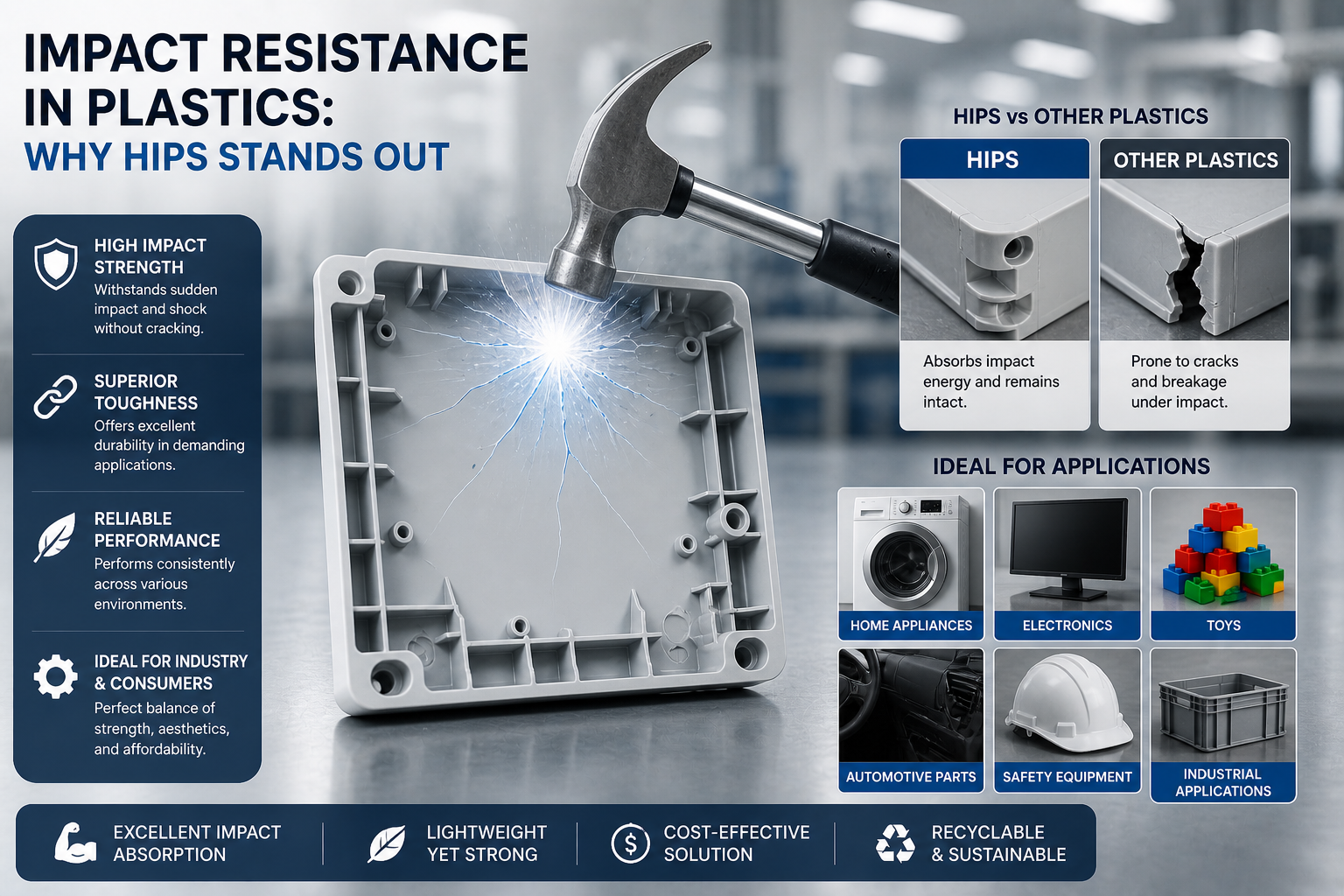
High Impact Polystyrene (HIPS) is produced by dissolving polybutadiene rubber in the styrene feed before polymerisation. The rubber forms a dispersed phase within the polystyrene matrix, absorbing impact energy and arresting micro-crack propagation. This makes HIPS opaque but dramatically tougher, making it the material of choice for appliance housings, electronic casings, refrigerator liners, toys, and automotive interior trim.
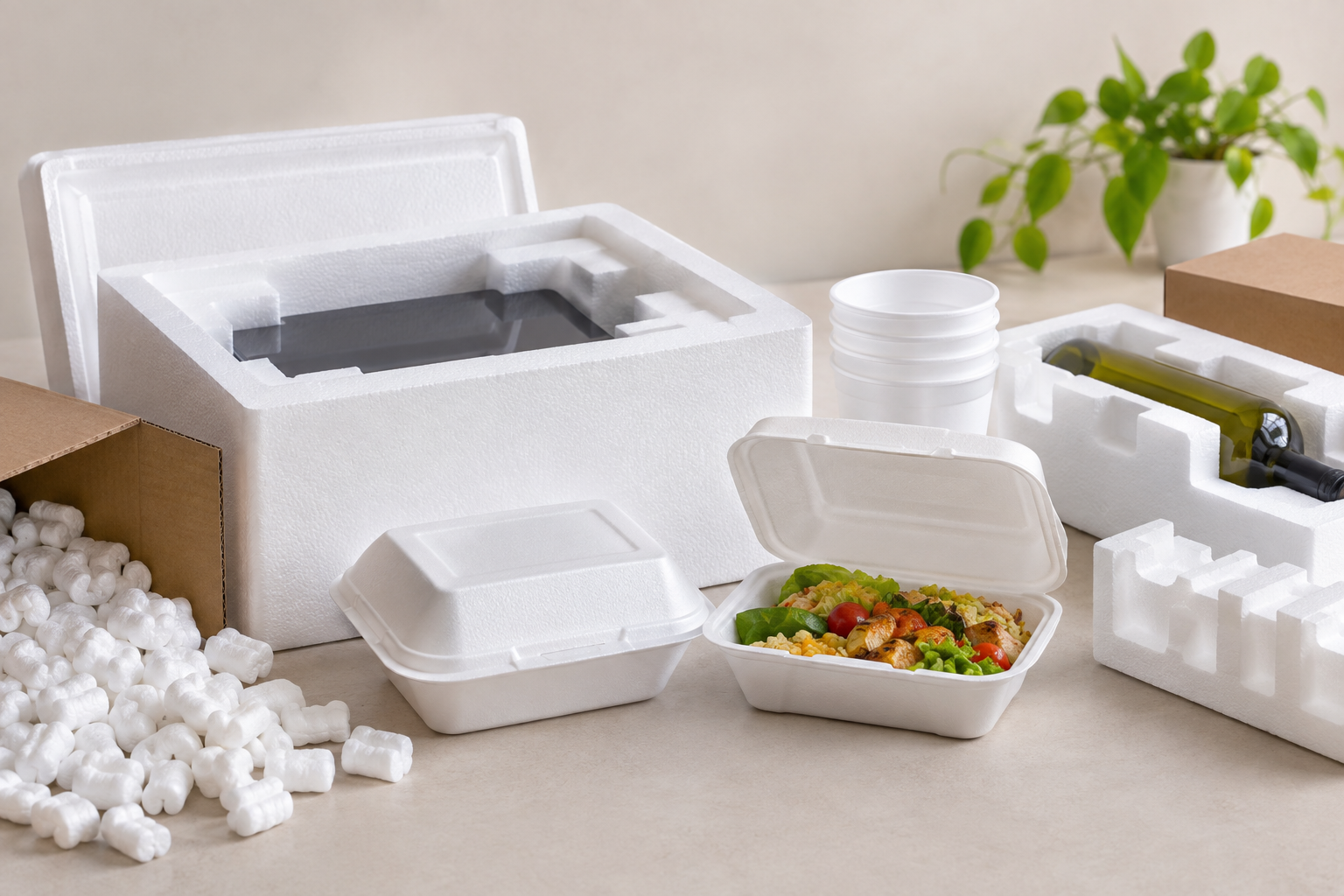
Expanded Polystyrene (EPS) beads are expanded using steam to 40–50 times their original volume, yielding the lightweight, closed-cell foam widely used as a polystyrene packaging material for fragile and perishable goods, and as thermal insulation in construction. Supreme Petrochem operates 118,000 TPA EPS capacity at Nagothane and 33,000 MTPA at Chennai. Extruded Polystyrene (XPS), the premium insulation grade, is produced by continuous extrusion, yielding denser, more uniform closed-cell foam with superior compressive strength and lower water absorption than EPS. Supreme Petrochem operates India’s first and only XPS plant.
Why Polystyrene Is Preferred for Packaging, Insulation, and Electronics
As a polystyrene packaging material, GPPS offers glass-like clarity and dimensional precision for food and retail packaging, while EPS foam absorbs and distributes impact energy to protect fragile goods and provides low thermal conductivity for cold-chain distribution of food, pharmaceuticals, and vaccines. In construction, EPS and XPS traps still air within their cellular structures, making them among the poorest conductors of heat, and their moisture resistance ensures insulating performance is maintained throughout the full building lifespan.
In electronics, HIPS provides structural material for equipment housings and internal components, valued for its ease of moulding and dimensional stability, while EPS provides protective packaging that safely ships those products. Supreme Petrochem’s HIPS grades are formulated for the specific flow, surface finish, and impact requirements of electronics manufacturers, and its EPS grades deliver the compressive strength and cushioning needed for appliance packaging specifications.
Polystyrene vs ABS and Polypropylene: Thermoplastic Manufacturing Comparison
ABS combines the chemical resistance of acrylonitrile, the impact toughness of butadiene, and the rigidity of styrene, delivering tensile strength of 35–50 MPa and notched Izod impact strength of 200–400 J/m, significantly higher than standard polystyrene plastic grades. ABS is preferred for structural components in automotive interiors, computer keyboard keys, and equipment housings. However, ABS costs more than polystyrene; for food packaging, display items, or single-use consumer goods where its impact performance is unnecessary, polystyrene plastic offers equivalent or superior optical properties at lower cost. Supreme Petrochem has commenced mass ABS production at 70,000 MTPA in Nagothane, in partnership with Versalis-Eni Chemicals Group, using a cleaner process than conventional emulsion-based ABS.
Polypropylene (PP) offers a melting point of approximately 160–170°C and superior chemical resistance, making it the preferred specification for microwave-safe containers and chemically exposed parts. However, standard PP is not transparent and offers inferior surface aesthetics to GPPS. For cold-food display, GPPS remains the benchmark clear material; for construction foam insulation, polystyrene’s EPS and XPS grades have no PP equivalent and set the global standard. The practical reality is that no single thermoplastic is universally superior. Supreme Petrochem’s breadth of products, spanning GPPS, HIPS, EPS, XPS, ABS, and speciality compounds, enables customers to specify the right high-performance plastics solution for every application.
Supreme Petrochem: A World-Class Thermoplastic Manufacturing Facility
Supreme Petrochem Ltd is India’s largest producer and exporter of polystyrene plastic, holding a domestic market share exceeding 50% and serving customers in more than 100 countries. The Nagothane (Amdoshi) facility in Maharashtra, India’s only international-scale styrenics complex, covers 337 acres and houses four GPPS and HIPS production lines, an EPS plant, an XPS plant, a speciality compounding unit, and a 70,000 MTPA mass ABS facility with a second phase planned. Polystyrene production uses technology from Huntsman Chemical Corporation (USA); ABS production is based on a licence agreement with Versalis-Eni Chemicals Group (Italy). This combination of international technology and domestic manufacturing depth enables SPL to produce consistent, quality-assured polymer grades trusted by multinational brands across packaging, appliances, electronics, and construction.
From the first moment of styrene polymerisation to the finished product on a production line, polystyrene plastic is a material of remarkable range. Its grades GPPS for clarity, HIPS for toughness, EPS for lightweight protection, XPS for high-performance construction serve the full breadth of polystyrene industrial uses across packaging, electronics, construction, food service, automotive, and medical sectors. For those sourcing high-performance plastics for demanding applications, Supreme Petrochem’s integrated portfolio of polystyrene grades, EPS, XPS, speciality compounds, masterbatches, and ABS offers a single-source solution backed by three decades of thermoplastic manufacturing expertise.
Frequently Asked Questions
GPPS is a clear, rigid thermoplastic prized for its optical transparency, dimensional stability, and ease of processing, and is ideal for food packaging, cosmetic containers, and laboratory disposables. HIPS is modified with polybutadiene rubber, making it opaque but significantly tougher and more impact-resistant, and is used in appliance housings, electronic casings, and automotive trim. EPS is a foam form of polystyrene plastic produced by steam-expanding polymer beads, yielding a lightweight, thermally insulating, shock-absorbing material used widely as a polystyrene packaging material and in construction insulation.
Styrene polymerisation converts styrene monomer derived from benzene and ethylene into polystyrene plastic through an addition polymerisation reaction. Free radicals initiate chain growth by breaking each monomer’s double bond; chains extend through sequential monomer addition (propagation) until terminated. The dominant commercial process is continuous bulk (mass) polymerisation at elevated temperature, producing high-purity, transparent polystyrene granules without added solvents or initiators.
Polystyrene industrial uses span packaging, construction, electronics, consumer appliances, food service, automotive, medical and laboratory equipment. Rigid GPPS and EPS foam serve as polystyrene packaging material; EPS and XPS boards provide construction thermal insulation; HIPS is used for electronics and appliance housings and automotive interior trim; GPPS is standard in medical laboratory disposables due to its clarity and sterilisability.
ABS delivers higher tensile strength, superior impact resistance, and better heat deflection than standard polystyrene plastic, making it the right choice for structural components, automotive interiors, and safety-critical enclosures. Polystyrene is preferred for cost efficiency, optical clarity (GPPS), food-safe packaging, and lightweight insulation (EPS/XPS). Supreme Petrochem produces both grades at its Nagothane facility, allowing customers to source from a single qualified supplier.