In this blog, Supreme Petrochem examines the most commercially widespread applications of general-purpose polystyrene and its role as the preferred material for transparent consumer and packaging products.
As India’s largest producer of polystyrene plastic with a capacity of over 300,000 TPA at our Nagothane plant in Maharashtra, we bring technical expertise that few can match. Our range of GPPS transparent plastic grades serves manufacturers across food and beverage packaging, cosmetics, medical devices, stationery, and electronics, wherever optical clarity, dimensional precision, and processing efficiency must be combined in a single, affordable material.
The appeal of general-purpose polystyrene for packaging and consumer goods lies in a combination of properties that is difficult to replicate at a comparable cost. Its glass-like clarity, with light transmittance of 88–92%, makes it the benchmark clear plastic packaging material for visibility-driven applications. Its ease of processing by injection moulding, extrusion, and thermoforming enables high-volume, thin-walled production. And its food-contact compliance, FDA 21 CFR 177.1640 and EU regulations, makes it a trusted choice for polystyrene food packaging and polystyrene disposable products across global supply chains.
Key GPPS Material Properties That Make It the Benchmark Clear Packaging Material
The suitability of general-purpose polystyrene for transparent packaging is a convergence of several mutually reinforcing characteristics. As an amorphous, single-phase homopolymer entirely uniform at the microscopic level with no secondary phases, light passes through without scattering, producing the glass-like transparency for which crystal polystyrene is named. With light transmittance of 88–92% and a refractive index of 1.59–1.60, GPPS transparent plastic delivers a surface gloss and brilliance that makes packaged products look their best on the shelf.
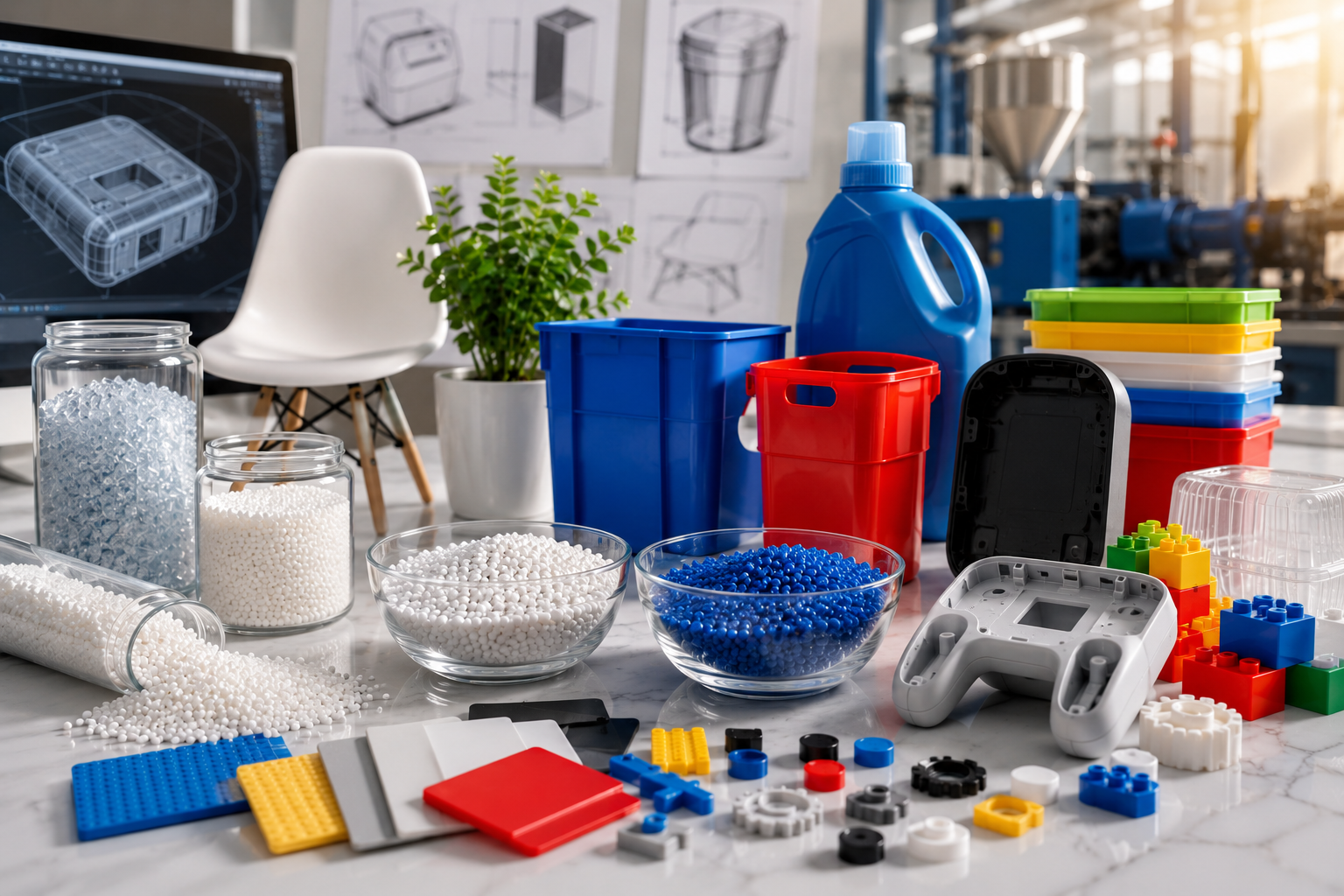
Beyond clarity, GPPS material properties include high rigidity and a strong flexural modulus. Containers and trays maintain their shape under handling, stacking, and transit without buckling or warping. Very low moisture absorption ensures clarity and stiffness are retained in humid or wet conditions, making GPPS reliable for food and beverage contact. Processing efficiency is equally important: GPPS does not require pre-drying in most applications (drying at 80°C for 2 hours is recommended only for maximum clarity), and its good melt flow makes it straightforward to run at high volumes on standard equipment. At commodity-scale pricing, all of these properties together make general-purpose polystyrene the most cost-effective clear plastic packaging material for high-volume food service and retail.
GPPS for Food Packaging, Cosmetics, Medical, and Retail Display Applications
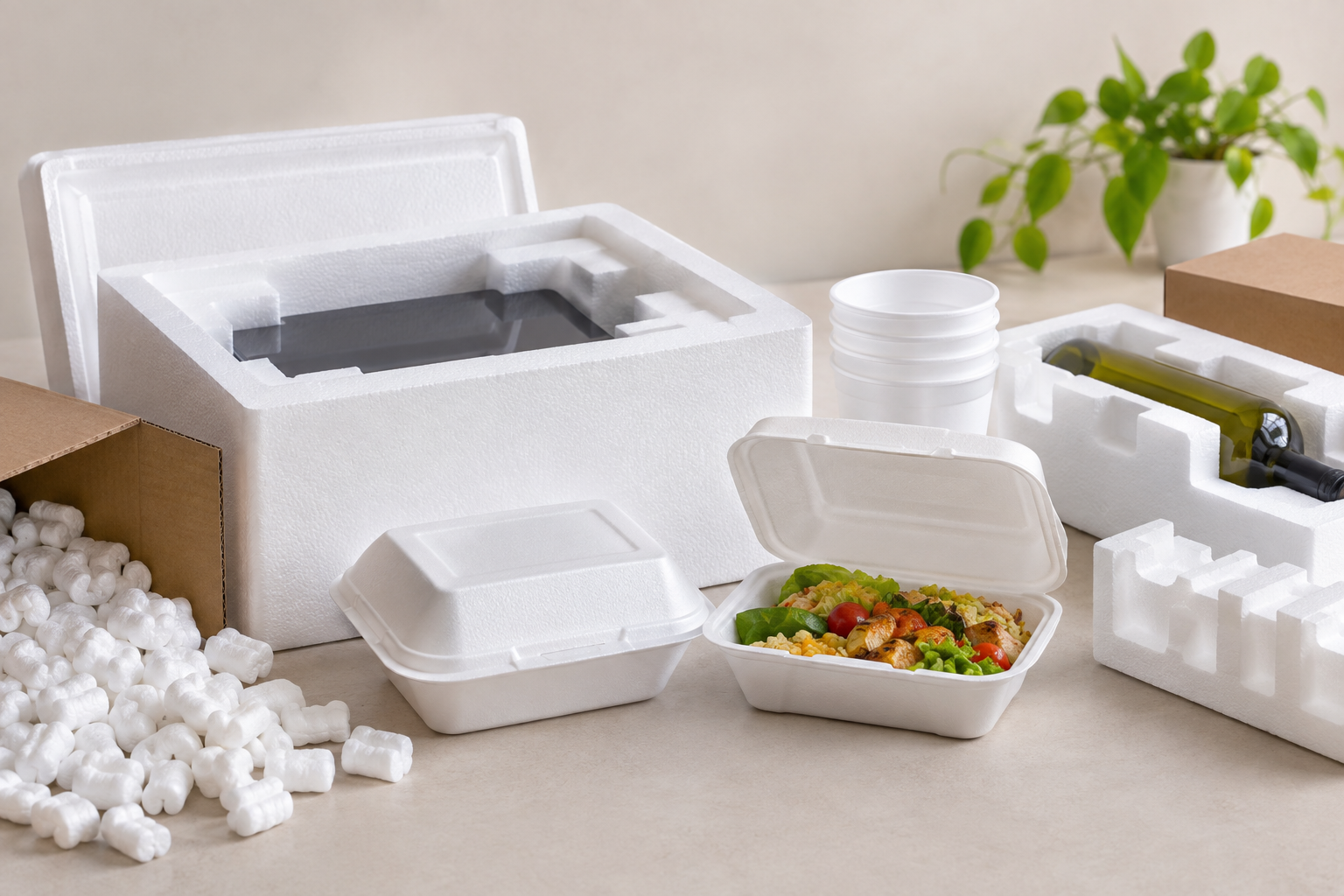
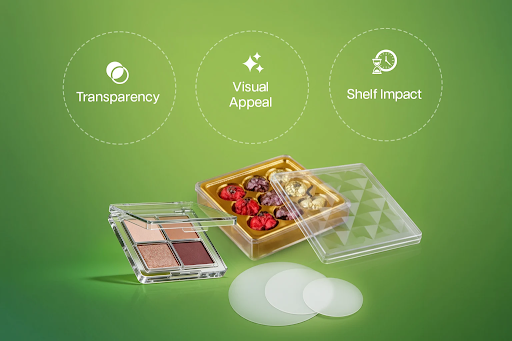
Food packaging is the largest end-use for general-purpose polystyrene. Clear cups, lids, clamshells, salad bowls, fruit trays, and confectionery packaging all rely on GPPS’s glass-like clarity to let consumers see the product inside, a commercially significant advantage in retail. Polystyrene food packaging grades, including Supreme Petrochem’s SC203EL, comply with FDA 21 CFR 177.1640 and EU food contact regulations, covering applications in contact with dry, moist, and fatty foods at cold or ambient temperatures. GPPS’s flavour neutrality and low odour transfer are equally important, as the material does not affect the taste or aroma of food contents.
In cosmetics, Supreme Petrochem’s SC206 grade, with its sparkling shine and distinctive blue tone, is engineered for premium cosmetic packaging, including lipstick cases, compacts, cosmetic jars, jewellery boxes, and decorative items. For medical and laboratory applications, GPPS grades compliant with FDA 21 CFR 177.1640 are used for Petri dishes, tissue culture dishes, diagnostic pipettes, screw vials, infusion trays, and sample containers, wherever visual inspection of contents is functionally essential. In retail display and point-of-purchase, clear display boxes, blister packs, and transparent stationery items (rulers, pen barrels, document holders) exploit GPPS transparent plastic’s high gloss and rigidity for maximum product visibility.
GPPS vs PET vs PP: Choosing the Right Clear Plastic Packaging Material
For packaging specifiers, the choice between general-purpose polystyrene, PET, and PP involves a clear trade-off between optical performance, heat resistance, and cost:
| Property | GPPS | PET | PP (standard) |
| Optical clarity | Glass-like (88–92%) | High (slight tint possible) | Low (milky/hazy) |
| Rigidity/stiffness | High | High | Moderate |
| Heat resistance | Low (~80–100°C HDT) | Moderate | High (~160–170°C) |
| Cost | Low | Low–moderate | Low |
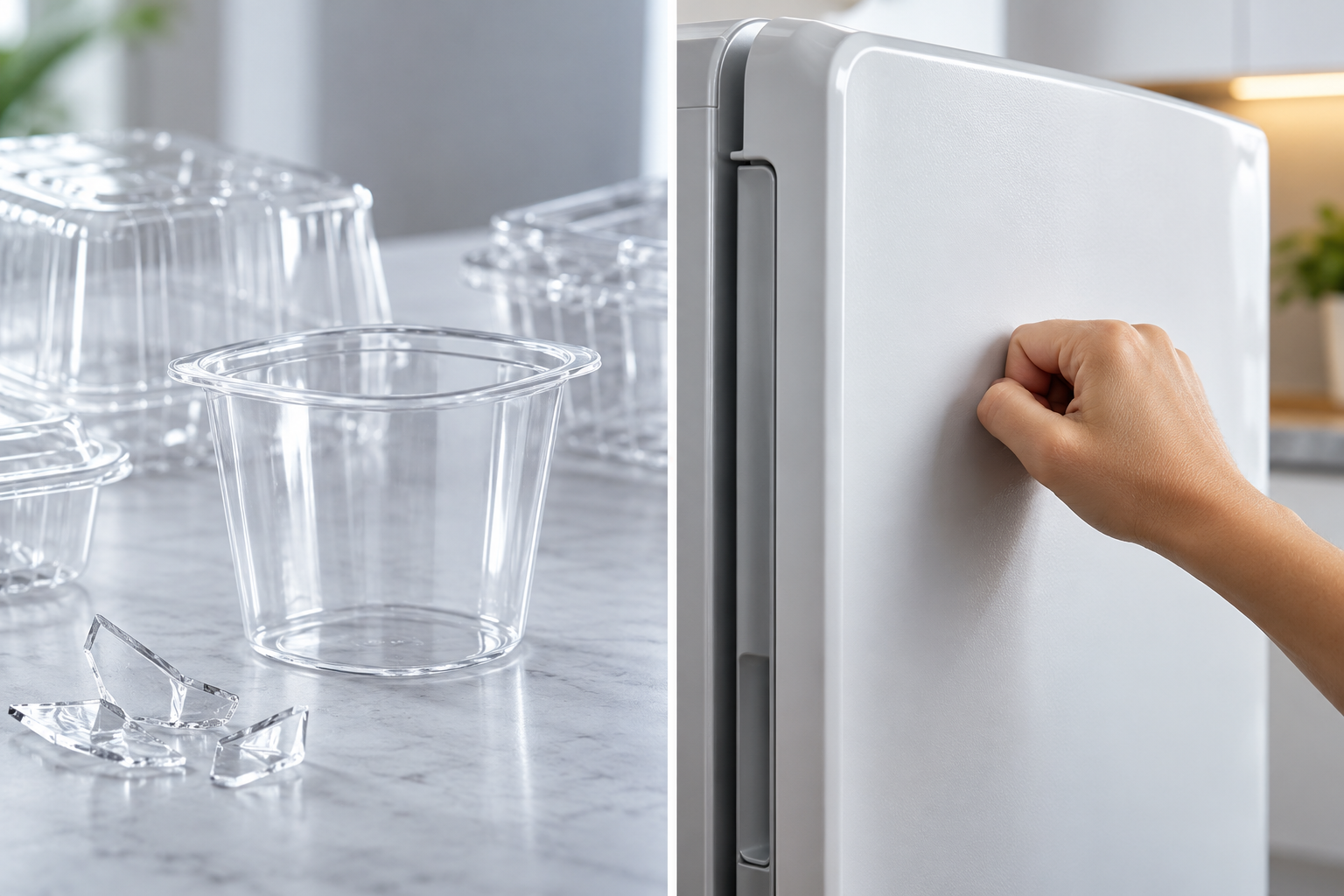
| Impact resistance | Low (brittle) | Good | Moderate–good |
| Food contact approved | Yes (FDA, EU) | Yes (FDA, EU) | Yes (FDA, EU) |
| Microwave suitability | No | No (standard) | Yes |
| Best for | Clear cold-food packaging, displays, and medical disposables | Beverage bottles, gas-barrier packaging | Hot-fill, reusable containers |
GPPS transparent plastic is the benchmark for cold-food display, retail packaging, and polystyrene disposable products, where optical purity drives commercial value, outperforming milky standard PP and matching or exceeding PET’s clarity at a lower cost. PET is preferred for gas-barrier packaging (carbonated beverages, oxygen-sensitive foods) and benefits from a more established recycling infrastructure. PP is the specification for microwave-safe and hot-fill containers, or for applications requiring chemical resistance. When neither gas barrier nor microwave performance is required, general-purpose polystyrene delivers the best optical performance at the lowest material cost.
Supreme Petrochem’s GPPS Grade Portfolio: Engineered for Clear Packaging Excellence
Supreme Petrochem’s GPPS transparent plastic range is one of the most comprehensive available from any single domestic producer in India. Each grade is engineered for specific application requirements:
SC201LV: High-molecular-weight grade for large-volume clear moulded products, refrigerator crisper trays, egg trays, toothbrush handles, and medical disposables, including Petri dishes and tissue culture dishes. A water-clear variant (SC201LVLT) is available for maximum optical purity.
SC203EL: Medium-flow grade for crystalware, mugs, trays, thin-walled cups, and medical applications, including disposable infusion trays and screw vials. Complies with FDA 21 CFR 177.1640 and UL 94 HB.
SC206: Cosmetics-specialised grade with a sparkling shine and distinctive blue tone, designed for tableware, cosmetic containers, bangles, timepieces, and decorative items.
Extrusion and foam grades: Available for clear and embossed sheet production, cap-layer coextrusion on HIPS sheet, food packaging trays, clamshells, and foam PS food packaging applications.
All Supreme Petrochem general-purpose polystyrene packaging grades are supplied in moisture-proof 25 kg and 900 kg jumbo bags, with full technical support on grade selection, processing guidance, and quality documentation.
The case for general-purpose polystyrene as the material of choice for transparent packaging rests on a combination of optical clarity, rigidity, dimensional stability, low moisture absorption, and food-contact compliance that no other commodity thermoplastic fully replicates at the same price point. Supreme Petrochem’s comprehensive range of GPPS transparent plastic grades, from high-molecular-weight injection-moulding grades to specialist cosmetic and foam-extrusion grades, gives customers the product depth and technical support to specify exactly the right clear plastic packaging material for every application.
Frequently Asked Questions
General-purpose polystyrene is preferred for polystyrene food packaging because it combines 88–92% light transmittance with rigidity, dimensional stability, low moisture absorption, and compliance with FDA 21 CFR 177.1640 and EU food contact regulations. Its commodity-scale cost makes it the most economical clear plastic packaging material for high-volume cold or ambient food service and retail applications where microwave capability and gas barrier performance are not required.
GPPS transparent plastic offers glass-like clarity with up to 92% light transmittance, matching or exceeding standard PET in many food packaging applications and significantly better than unmodified PP, which appears milky or hazy. PET may exhibit a slight tint in recycled grades; standard PP requires specialist additives to achieve GPPS clarity at an added cost. For optical purity at minimum cost, general-purpose polystyrene is the benchmark choice.
Polystyrene disposable products manufactured from general-purpose polystyrene include disposable cups, lids, cutlery, and food-service trays; clear clamshell and blister packs; laboratory Petri dishes, test tubes, and pipettes; cosmetic compacts and jars; transparent stationery items; and CD cases. Supreme Petrochem produces specific GPPS grades for each category, meeting appropriate food-contact and medical compliance requirements.
Yes. General-purpose polystyrene is widely used in cosmetic packaging. Supreme Petrochem’s SC206 grade delivers the sparkling surface quality that premium cosmetics require. For medical applications, FDA-compliant GPPS grades are used for Petri dishes, diagnostic disposables, and infusion trays, where visual inspection of contents is clinically essential. GPPS’s compatibility with standard sterilisation methods makes it a trusted specification in pharmaceutical and laboratory supply chains.